Aesthetic Wallpaper: 7 Styles and How to Choose by Room
Aesthetic wallpaper works best when the pattern fits the room, the light, and the scale of the wall. Instead of chasing a yearly trend list, use this guide to choose among seven enduring wallpaper looks and then test a sample in the actual space before ordering full rolls.
| Style | What it does | Rooms where it often works well |
|---|---|---|
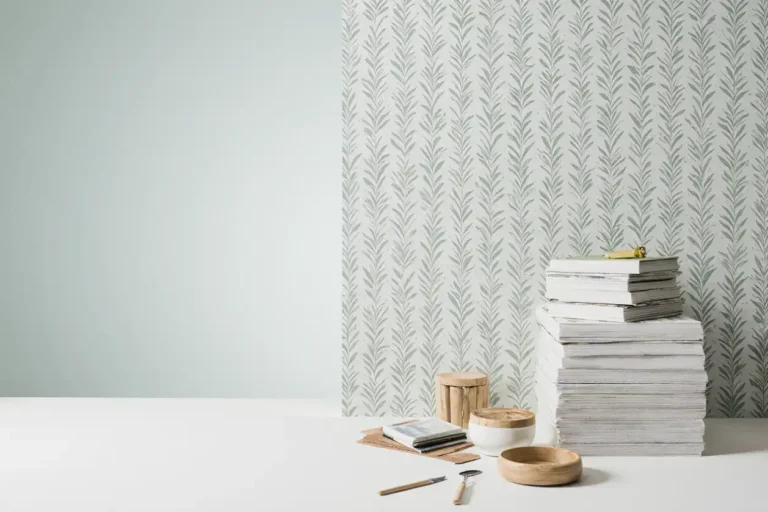
| Botanical | Adds organic shapes, foliage, or florals; can feel calm or dramatic depending on scale and contrast. | Living rooms, bedrooms, dining rooms, powder rooms |
| Geometric | Creates structure and rhythm; small repeats read quieter than oversized graphics. | Offices, entries, modern bedrooms, accent walls |
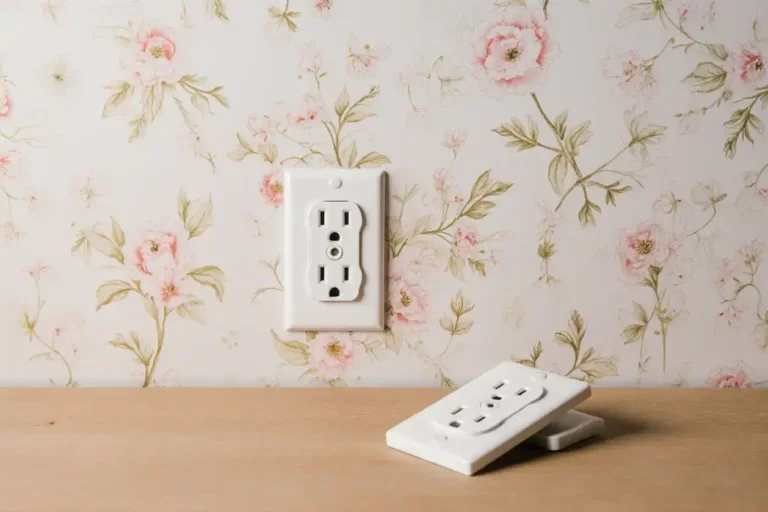
| Vintage floral | Brings softness, pattern density, and a collected look. | Bedrooms, dining rooms, reading rooms |
| Toile or chinoiserie-inspired | Uses scenic or narrative motifs that reward closer viewing. | Dining rooms, bedrooms, powder rooms |
| Textured or linen-look | Adds visual depth without a dominant motif. | Living rooms, offices, bedrooms, hallways |
| Maximalist | Uses high color, contrast, or dense pattern as a focal point. | Powder rooms, dining rooms, feature walls |
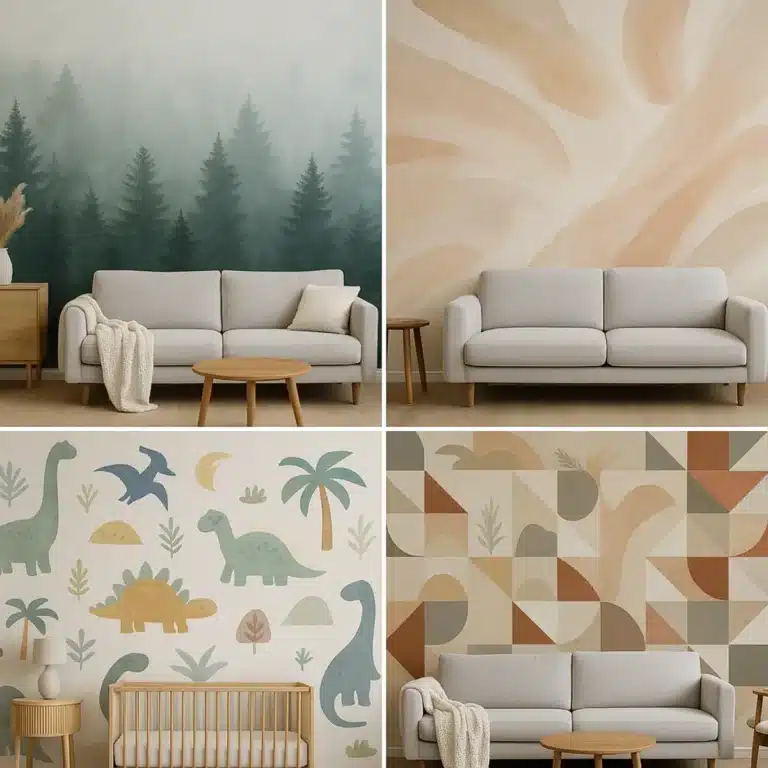
| Mural or panoramic | Treats the wall as one large composition rather than a repeating field. | Bedrooms, living rooms, nurseries, offices |
Choose Wallpaper by Room, Not Just by Style Name
Living room: Start with the largest uninterrupted wall. Large-scale botanicals, murals, or quiet texture can work well, but check the pattern from across the room before committing.
Bedroom: Lower-contrast color combinations and softer repeats tend to compete less with bedding, art, and window treatments. A dramatic mural can work behind the bed when the composition fits the furniture placement.
Powder room: Small rooms can handle strong color and dense pattern because the wallpaper is experienced at close range and for short periods. Measure carefully around doors, windows, vanities, and sloped ceilings.
Home office: Consider what will sit in front of the wall. Fine geometrics and subtle texture can add interest without creating a distracting video-call background.
Kids’ rooms and nurseries: Look beyond the motif. Check the manufacturer’s cleaning instructions, adhesive type, and removal guidance so the product matches how the room will actually be used.
Bathrooms: Do not assume every wallpaper is suitable for humidity. Follow the product manufacturer’s surface and moisture guidance, provide ventilation, and keep wallpaper out of direct-wet areas unless the specific product and installation system are rated for that use.
Pattern Scale Changes How the Room Feels
- Small-scale repeats can read almost like texture from across a room.
- Medium-scale patterns usually remain recognizable without dominating every wall.
- Large-scale motifs need enough uninterrupted wall area to show the design. Furniture, doors, and windows can crop the composition.
- High contrast makes pattern edges more visible; low contrast can make the same repeat feel quieter.
Always order a sample when available and view it in morning, afternoon, and artificial light. Color temperature, sheen, and nearby finishes can change how a printed pattern reads.
Do Not Calculate Wallpaper by Square Feet Alone
Wallpaper quantity depends on more than wall area. Roll width and length, wall height, usable drops per roll, pattern repeat, and the match type can all change how many rolls you need. A straight match, half-drop match, or offset design may require extra material to align the pattern from strip to strip.
Use the Wallpaper Calculator instead of adding a universal 10% allowance. Enter the dimensions and product specifications from the wallpaper listing so the estimate can account for repeat and drop information.
Peel-and-Stick Is Not Automatically Renter-Proof
“Removable” is a product claim, not a guarantee for every wall. Paint age, sheen, surface condition, texture, humidity, adhesive chemistry, and how long the paper stays installed can affect removal. Check the manufacturer’s instructions and test a small hidden area first. If you rent, also check the lease or get permission when required.
For the installation process, use our peel-and-stick wallpaper installation guide. If you want one large scene instead of a repeating pattern, see the peel-and-stick wall mural guide.
A Simple Decision Checklist
- Choose the room and the wall before choosing a pattern.
- Decide whether you want the wall to act as a backdrop or a focal point.
- Check pattern scale against furniture and openings.
- View a sample in the room’s actual light.
- Confirm the product is approved for the wall surface and room conditions.
- Use the manufacturer’s repeat and match specifications in the Wallpaper Calculator.
- Read installation and removal instructions before ordering.
Wallpaper Tools Worth Having
For a DIY install, the useful basics are usually a smoothing tool, sharp knife with spare blades, straightedge, level, measuring tape, pencil, and the adhesive or primer required by the specific wallpaper system.
Browse wallpaper installation tools on Amazon.
As an Amazon Associate, I earn from qualifying purchases.
For more planning help, visit Wallpaper Resources for the calculator, installation guides, murals, and related project advice.