
Christmas Color Schemes That Work With Your Living Room
The best Christmas color schemes begin with the room you already own. Using the same room-first approach as our paint and color planning guide, choose decorations beside your walls, sofa, flooring and curtains. The holiday should not require a new living room.
Quick answer: Repeat one color already in your room, add a contrasting holiday accent, and choose a metal or pale neutral to connect the two. Try cranberry, evergreen and antique gold with warm cream walls; navy, ivory and brass with brown leather; or blush, burgundy and champagne with mushroom and taupe. These are decorating starting points, not exact paint matches.
Your favorite ornament does not have to pass a color test. Give the sentimental pieces their place, then use ribbon and repeated finishes to make the rest of the room feel connected.
Which Christmas Palette Fits Your Living Room?
Look at the largest surfaces first. A small ornament can change; a stone fireplace, oak floor or deep blue sofa usually stays. Pick the row closest to those permanent features, then test the proposed colors with objects you already have.
| Your Existing Room | Christmas Palette to Try | Start Here |
|---|---|---|
| Warm cream walls and wood furniture | Cranberry, evergreen, antique gold | Red ribbon on the tree; repeat the gold already in lamps or frames. |
| Brown leather and warm wood | Navy, ivory, aged brass | Ivory ornaments for contrast, with navy ribbon tying into textiles. |
| Mushroom, taupe or oatmeal | Blush, burgundy, champagne | A few burgundy accents give the softer pinks definition. |
| Gray walls and silver finishes | Dusty blue, soft white, silver | Repeat blue on the tree and one nearby surface. |
| Olive or sage walls | Cream, copper, natural wood | Use pale ornaments to stand apart from the green background. |
| Dark green, navy or charcoal walls | Ivory, berry, brushed gold | Make the pale and reflective decorations easy to see. |
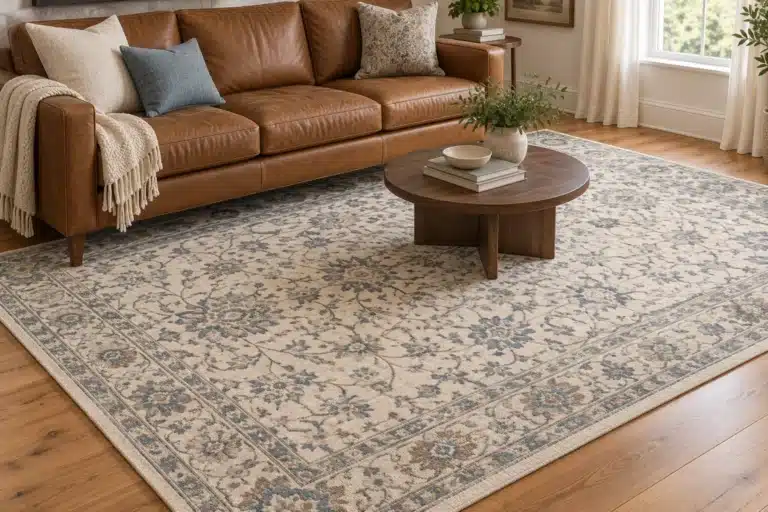
| Patterned upholstery or a colorful rug | One existing accent, cream, clear glass | Borrow a color from the pattern instead of adding a competing one. |
How Do You Choose Christmas Colors Without Repainting?
Put three things together beside the sofa: an ornament you want to keep, a ribbon or fabric sample, and something in your proposed metal finish. Look at them in daylight and with the lamps you use at night. A combination that works on a shopping page may feel too yellow, icy or vivid beside your actual furniture.
Choose three roles rather than three equal piles of decorations. One color connects to the room, one supplies the holiday accent, and one provides contrast. The green of a tree already counts as a major color. You do not need to repeat green on every cushion and tabletop.
For a room with several wood tones, BEHR’s farmhouse color guidance offers examples of warm whites, greens, blues and browns alongside wood. Use the examples to notice relationships, then compare materials in your own room. Our guide to choosing colors for your room’s light helps if you are also planning a permanent paint change.
1. Cranberry, Evergreen and Antique Gold
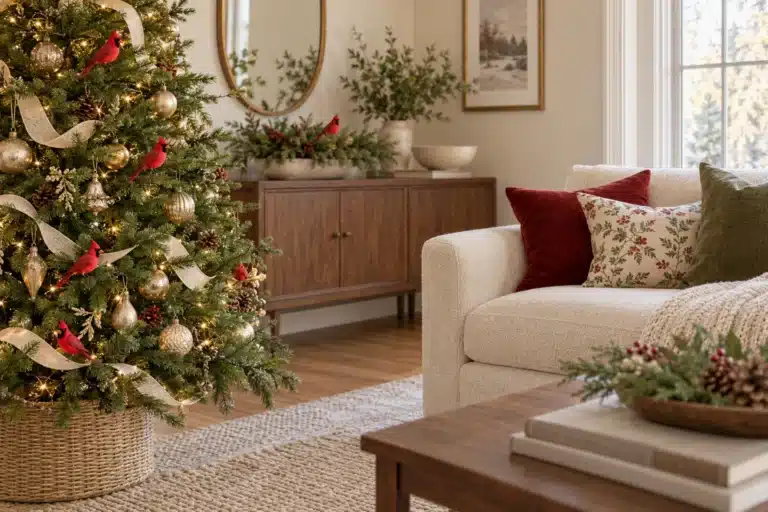
This is a useful starting point for a living room with cream walls, oak or walnut furniture, and warm metal finishes. Keep the red on the deeper side if bright scarlet feels abrupt against the room. A faded rug or patterned cushion may already supply the cranberry note.
On the tree, repeat cranberry ribbon between gold ornaments and leave some branches visible. On a console, use a bowl of the same ornaments or one ribbon-tied vase. The room needs a few connections, not a matching display on every surface.
For a cardinal-red variation, place a few red bird ornaments against evergreen branches, then soften the contrast with cream ribbon and antique gold. Repeat one bird on a simple console arrangement. Our cardinal Christmas decorating guide shows how to adapt that idea to a tree, wreath, mantel or table while keeping the room’s existing furniture and colors.
Reuse first: brass frames, cream throws, red books and existing evergreen decorations. Add only if needed: ribbon in a red that works beside the sofa. If the room already feels very golden, try a muted metal finish before buying more bright yellow gold.
2. Navy, Ivory and Aged Brass
For a blue Christmas tree scheme in a warm room, ivory can be the connection between dark blue decorations and brown furniture. Start with ivory ornaments, then use navy ribbon or a smaller group of blue baubles. The blue does not need to occupy every branch.
Repeat the navy in an existing cushion, rug detail or book cover. Let a brass lamp or frame supply the metal note. If you have a dark tree in a dim corner, keep more pale decorations on the visible side so the blue does not disappear.
Reuse first: blue-and-white ceramics, cream textiles and brass accessories. Add only if needed: a small group of ivory ornaments. For the year-round room, see our brown leather sofa color palettes; this holiday scheme changes the accents, not the furniture plan.
3. Blush, Burgundy and Champagne
Pink Christmas decor can feel at home with mushroom walls, oatmeal upholstery and vintage wood. Use blush for softness, burgundy for a darker point of contrast, and a muted champagne finish for a little light. Compare actual finishes: one retailer’s champagne can look yellow while another looks pink.
Try pale pink ornaments with a few burgundy bows. Carry the darker red to one cushion or a small tabletop arrangement. Keeping the deeper color selective lets the pink stay gentle without leaving the room visually flat.
Reuse first: rose-toned textiles, amber glass and vintage ornaments. Add only if needed: burgundy ribbon. For background colors, our warm neutral palette guide covers the permanent room separately.
4. Dusty Blue, Soft White and Silver
This direction suits rooms where gray upholstery, cooler walls or silver hardware already set the tone. Choose a softened blue if you want a quiet look. A bright electric blue creates a different effect and may compete with subtle furnishings.
Mix matte white ornaments with a few reflective silver pieces so the finishes do not all catch light the same way. Test the tree lights before decorating the whole tree. Look at the combination with the room lamps on, not only with the tree glowing in darkness.
Reuse first: clear glass, white pottery and silver trays. Add only if needed: dusty blue ribbon. If the result feels colder than you want, bring back texture through an existing knit throw or a wood basket rather than adding another metallic color.
5. Cream, Copper and Natural Wood
In an olive or sage room, let the walls and tree supply the green. Cream ornaments create separation, while copper and wood keep the display warm. This works as a quieter Christmas direction when red is not a color you enjoy living with.
Use simple wood ornaments, cream ribbon and a few copper-colored accents. Keep the console arrangement low and leave useful space for keys, a lamp or a drink. A holiday display should not make the room harder to use.
Reuse first: wood bowls, woven baskets, cream ceramics and copper-colored accessories. Add only if needed: pale ornaments that show against the tree. The rustic farmhouse color guide offers related wall-color directions for a longer-term project.
6. Ivory, Berry and Brushed Gold
A dark green, navy or charcoal living room does not need another dark layer everywhere. Give the tree pale ornaments and a restrained metal finish, then use berry ribbon for the holiday accent. The room’s walls supply much of the drama already.
Place one pale ceramic bowl or vase near the seating area to repeat the ivory. Try the proposed decorations against the wall before choosing their size and quantity. Small dark objects can get lost where a larger pale piece would read clearly.
Reuse first: light throws, pale lampshades and existing gold frames. Add only if needed: ivory ornaments. If your room uses the color drenching approach, let seasonal accessories provide contrast without changing the paint.
7. One Existing Accent, Cream and Clear Glass
A patterned rug, floral sofa or colorful wallpaper may already contain the Christmas palette. Choose one color you like from that pattern and repeat it in ribbon. Use cream and clear glass to give the collection some quieter space.
For example, a rug with muted teal and rust can support teal ribbon, cream ornaments and clear glass. You do not need to reproduce every color in the rug. Let the pattern remain part of the room instead of covering it with competing seasonal textiles.
Reuse first: family ornaments, glass vases and neutral linens. Add only if needed: one ribbon color. Where children or pets can reach decorations, compare non-glass alternatives and follow the item’s age and use guidance.
How Can You Carry the Palette Beyond the Tree?
Choose two other places you actually see from the seating area. Repeat one element at each: the ribbon color on a wreath, a metal finish on a tray, or the pale neutral in a cushion. The tree can remain the busiest part of the room.
In an open-plan space, use the same ribbon or ornament finish on the dining table instead of inventing a second theme. In a small living room, decorate vertically on the tree and keep the coffee table useful. Remove a few everyday accessories temporarily if that creates enough room for the holiday pieces.
What Is Worth Buying, and What Can You Reuse?
Before shopping, sort your decorations into keep, repair and skip. Then write down the missing role: a light ornament for a dark tree, ribbon that connects to the sofa, or a textile you will still use in January. A shopping list that says “ivory contrast” is more useful than one that says “more Christmas.”
The collections below are for year-round finishing pieces. They are not Christmas ornament catalogs, and the room illustration does not depict exact products sold by the linked retailers. The collections contain affiliate links; Cardinal Decor may earn from qualifying purchases.
Keep the Soft Layers
Look for an oatmeal throw or neutral cushion cover you can leave out after the decorations come down. Check cover dimensions and whether an insert is included.
Connect to Wood and Leather
A textured pillow or useful tray can tie the Christmas palette into existing furniture. Compare the finish with what is already in the room.
Finish a Moody Room
If the room is already dark and tonal, consider one pale or reflective accent. Skip new paint unless it was already part of your home project.
For lights and decorations, check the intended indoor or outdoor use and follow the manufacturer’s instructions. Keep lit candles away from anything that can burn, and switch off decorative lights before leaving home or going to bed. The National Fire Protection Association’s winter holiday guidance covers these practical precautions.
What Else Should You Know About Christmas Color Schemes?
Do Christmas Decorations Have to Match the Wall Color?
No. They can repeat the wall color, contrast with it, or connect through furniture and textiles instead. Test the combination beside the room’s largest surfaces. A repeated ribbon or metal finish can connect decorations that do not match exactly.
Can You Mix Gold and Silver Christmas Decorations?
Yes. A useful styling approach is to let one metal appear more often and use the other in a smaller group. Repeat both somewhere else in the room if you want the mix to feel deliberate. This is a design choice, not a fixed rule.
What Christmas Colors Work With a Brown Leather Sofa?
Try cranberry, evergreen and antique gold for a warmer traditional direction, or navy, ivory and aged brass for a blue-led scheme. Compare the accents with your leather: caramel, red-brown and chocolate sofas can respond differently to the same decorations.
Can a Christmas Tree Have More Than Three Colors?
Yes. A collection of family ornaments may be much more colorful. Use a repeated ribbon, consistent lights or a group of neutral ornaments to connect the pieces. Keep the decorations that mean something to you; the palette is there to help, not to edit out your memories.
Should You Repaint a Room to Match Christmas Decorations?
Usually, start by changing the temporary accents. If you already want a new wall color, choose it for the room across the year, then plan the Christmas palette around it. A December display is a short-term reason for a long-term paint decision.