Drywall Repair and Paint Cost: 2026 Guide
Planning answer: In 2026, a professional drywall repair project commonly falls between $296 and $928, while broader wall-repair projects can run from $380 to $1,436. A small hole may cost $50 to $300 to repair, and a large hole may cost $150 to $400 before painting. Your final price depends on the number and size of repairs, wall or ceiling access, texture matching, moisture or structural damage, and how much of the surface must be repainted.
Updated September 2, 2026. These are U.S. planning ranges, not a quote. Local labor rates and the condition of your wall can change the total substantially.
Check out our painting resources page for more project pricing guides, how-to articles, DIY FAQs, and free paint calculator tools.
Choose the Repair Method by Damage Size
| What you see | Likely repair | DIY or hire? | Planning cost |
|---|---|---|---|
| Nail holes, shallow dents, or a nail pop | Spackle or joint compound, light sanding, primer, and touch-up paint | Good first DIY repair if the drywall is dry and firm | Small DIY supplies often fit within a $10 to $30 repair-kit budget; a pro may charge $50 to $300 for a small-hole visit |
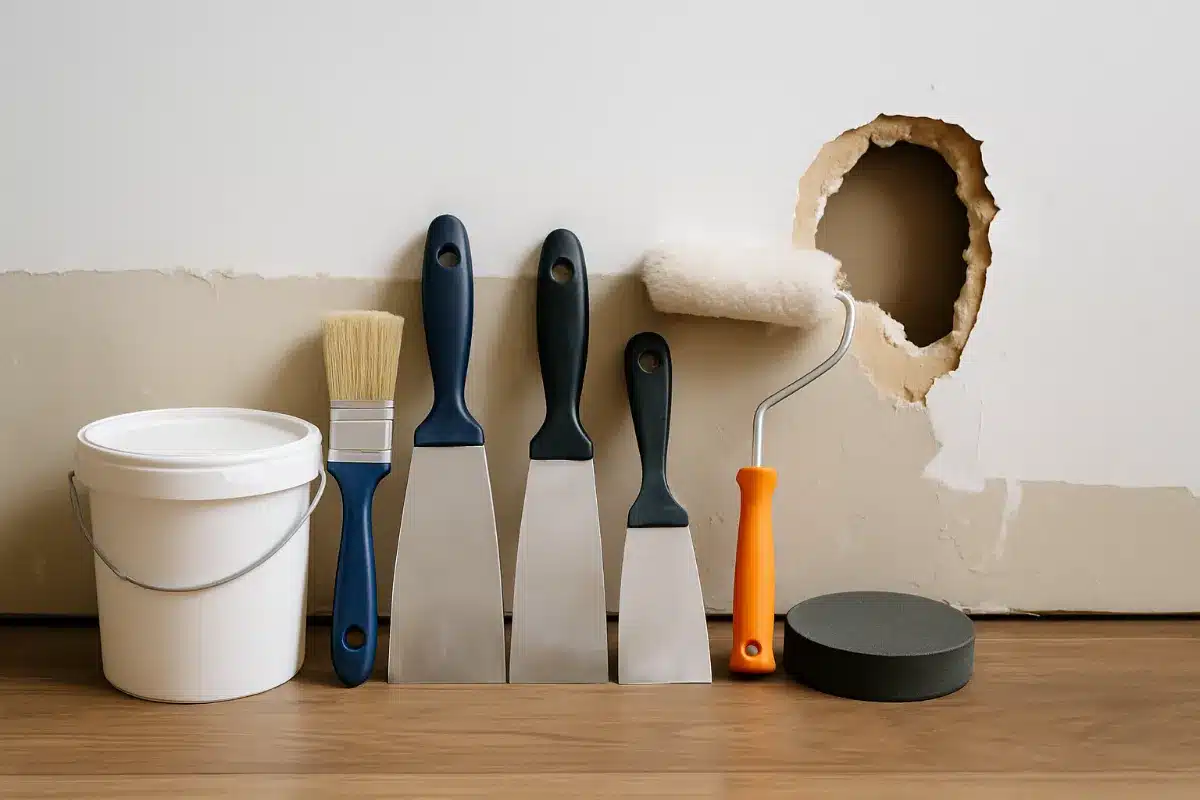
| A hole up to about 6 inches | Mesh patch or a fitted drywall patch, compound, sanding, primer, and paint | DIY is reasonable if you can confirm there are no utilities behind the cut | Expect a minimum service charge to matter more than materials; compare the bid with the $150 to $400 large-hole planning range |
| A hole larger than 6 inches or several damaged areas | New drywall secured to framing or furring strips, multiple compound coats, texture, primer, and paint | Hire a drywall professional if framing, utilities, finish matching, or multiple rooms are involved | Often falls within the $296 to $928 professional project range, but extensive work can exceed it |
| Ceiling damage, sagging, recurring cracks, or water stains | Find and correct the cause before patching; repair may involve plumbing, roofing, electrical, mold, or structure | Get the cause diagnosed before cosmetic work | Do not estimate from patch size alone; request an itemized local quote |
Lowe’s separates small dents and cracks, small holes that can use a mesh patch, and larger holes that require a fitted drywall patch. Its instructions also say to locate studs and electrical wires before cutting. USG describes a no-tape patch for impact damage up to roughly 6 by 6 inches. Use the product instructions for drying time, because setting compounds and premixed compounds do not cure on the same schedule.
What a Drywall Repair and Paint Quote Should Include
- Service minimum and travel: A small patch may still require several visits for compound, sanding, priming, and painting.
- Repair labor and materials: Ask whether drywall, backing, tape, compound, fasteners, sanding, and debris removal are included.
- Texture matching: Orange peel, knockdown, plaster-like finishes, and ceiling texture add labor and may require a larger blend area.
- Primer: Repaired drywall should be primed before finish paint so the patch does not absorb paint differently from the surrounding wall.
- Paint area: Confirm whether the quote covers a small touch-up, one full wall, or the entire room.
- Access and protection: High walls, ceilings, stairs, furniture moving, dust control, and floor protection can change the price.
- Underlying damage: Moisture, mold, loose drywall, damaged framing, and hidden utilities require separate diagnosis and may need another licensed trade.
A Better Way to Estimate the Total
Build the estimate in five parts instead of multiplying the hole size by one price:
- Repair scope: Count every hole, crack, seam, dent, and stained area. Note whether each is on a wall or ceiling.
- Cause correction: Add the cost of stopping leaks or addressing structural movement before drywall work begins.
- Finish work: Include texture matching, sanding, spot primer, and any stain-blocking primer specified for the surface.
- Paint quantity: Measure the repaint area and use the coverage listed on the chosen product. Sherwin-Williams says a gallon typically covers 350 to 400 square feet and a gallon of primer about 200 to 300 square feet, with results varying by surface and application.
- Labor and minimums: Compare the complete scope, number of visits, and exclusions across quotes, not only the hourly rate.
For a quick quantity check, use the paint calculator. Then review the paint coverage guide before buying, especially on new drywall, porous patches, deep colors, or textured walls.
Cost to Prime and Paint New Drywall
New drywall needs its own painting estimate because bare drywall paper and joint compound absorb coatings differently from an already painted wall. Price the job as separate steps: final surface inspection and sanding, dust cleanup, primer, finish paint, and labor. Do not assume a paint-and-primer product removes the need for a primer on fresh drywall; follow the coating manufacturer’s instructions for the substrate.
| Cost item | How to estimate it | What changes the price |
|---|---|---|
| Final drywall prep | Price sanding, touch-up compound, dust removal, masking, and protection | Finish level, seams, corners, ceilings, repairs, and access |
| Primer | Paintable area ÷ the primer’s listed coverage | Porosity, product, application method, and surface condition |
| Finish paint | Paintable area × planned coats ÷ the paint’s listed coverage | Color, sheen, hide, texture, product, and application method |
| Labor | Ask for prep, priming, each finish coat, cleanup, and return visits to be itemized | Local rates, room height, masking, ceilings, trim, and project size |
For material planning, Sherwin-Williams gives a general primer range of about 200 to 300 square feet per gallon and a finish-paint range of about 350 to 400 square feet per gallon. A 500-square-foot paintable area would need roughly 1.7 to 2.5 gallons of primer for one coat. If the finish requires two coats, 1,000 square feet of finish coverage works out to about 2.5 to 2.9 gallons before any project reserve. Check the exact product label before buying.
When comparing contractor bids for new drywall, ask whether the price includes final sanding, drywall-dust cleanup, spot corrections, primer, the stated number of finish coats, caulk, ceilings, trim, masking, floor protection, and cleanup. A low painting number can exclude prep that another bid includes.
Use the Paint Calculator for the measured wall area, then check the Paint Coverage Per Gallon guide for primer and finish-paint coverage planning.
Current Cost Benchmarks
| Benchmark | 2026 planning range | What it covers |
|---|---|---|
| Professional drywall repair | $296 to $928 | Angi’s normal range for a drywall service project; project size and location are major drivers |
| Broader wall repair | $380 to $1,436 | HomeAdvisor’s normal range across wall materials and damage types |
| Small hole | $50 to $300 | HomeAdvisor’s repair range; painting, finishing, texture, location, and contractor minimums can affect the bid |
| Large hole | $150 to $400 | HomeAdvisor’s repair range before related remediation or extensive finish work |
| Painting after repair | $2 to $7 per square foot | HomeAdvisor’s planning range for repainting or wallpapering after wall repair |
These sources use different project samples, which is why their overall ranges do not match. Treat them as screening benchmarks. A written local quote is the only reliable price for your wall, finish, and location.
DIY or Hire a Professional?
For a focused decision checklist covering water damage, ceilings, recurring cracks, texture matching and mold concerns, see When to Hire a Drywall Repair Service.
DIY can make sense when
- The damage is small, dry, stable, and easy to reach.
- You can safely confirm the location of studs, wires, and pipes.
- The wall is smooth or you are comfortable matching its texture.
- You have matching paint or are willing to repaint the full wall.
Get professional help when
- Damage is wet, soft, sagging, recurring, widespread, or on a ceiling.
- You suspect mold, lead paint, asbestos-containing material, structural movement, or damaged utilities.
- The wall or ceiling is part of a fire-rated assembly.
- You need an invisible texture and paint match in a prominent room.
For fire-rated walls or ceilings, USG advises restoring the assembly with like materials and consulting the applicable repair guidance. Cosmetic patch instructions are not enough for those assemblies.
Drywall Repair Estimate Checklist
- Photograph and measure each damaged area.
- Identify and correct the source of water or movement first.
- Ask whether the bid includes materials, texture, primer, paint, cleanup, and return visits.
- Confirm the exact paint boundary: patch, full wall, ceiling, trim, or whole room.
- Request the product names, sheen, color, and number of coats.
- Ask who handles furniture, floor protection, dust containment, and debris.
- Compare exclusions, warranty terms, schedule, insurance, and required local licensing.
- Keep a labeled sample or record of the final paint for future touch-ups.
Before the work begins, read how to prepare walls for painting. For the wider project path, return to Painting Resources or browse the Cardinal Decor project shop.
Frequently Asked Questions
Do I need to prime repaired drywall?
Yes. Primer helps even out porosity between joint compound, drywall paper, and the existing painted surface. Follow the primer and paint labels for compatibility and drying time.
Can I paint only the patch?
A small touch-up can work when you have the exact paint and the surrounding finish has not aged or faded. Otherwise, repainting from corner to corner usually produces a less noticeable result.
How long should joint compound dry before painting?
Use the manufacturer’s instructions. Drying time changes with the compound type, coat thickness, temperature, humidity, and airflow. Do not prime until the repair is fully dry and sanded.
Should a painter repair drywall?
Some painters handle small cosmetic patches, while others exclude drywall, texture, water damage, or structural cracks. Put the repair scope and finish standard in writing before accepting a bid.
Sources and Method
Cardinal Decor compared national planning ranges with manufacturer and retailer repair instructions. Cost figures are screening benchmarks and were checked on September 2, 2026. Repair and paint guidance was checked against the following sources:
- Angi, “How Much Does Drywall Repair Cost? [2026 Data],” updated July 9, 2026
- HomeAdvisor, “How Much Does Drywall Repair Cost?”, updated June 17, 2026
- Lowe’s, “How to Patch and Repair Drywall,” accessed September 2, 2026
- USG, “Surfaces and Finishes: How-To Repair Guides,” October 1, 2021
- USG, “Repair Drywall” fire-rated assembly guidance, accessed September 2, 2026
- Sherwin-Williams, Paint Calculator FAQs, accessed September 2, 2026