Ceramic vs. Porcelain Tile: Differences, Best Uses & Buying Guide
Quick answer: Porcelain is a type of ceramic tile. The standards-based difference is water absorption: porcelain tile has water absorption of 0.5% or less, while non-porcelain ceramic tile absorbs more than 0.5%. That lower absorption can matter for some wet and exterior applications, but the word “porcelain” does not automatically mean a tile is suitable for every floor, shower, patio, or climate.
The best choice comes from the specific product’s area-of-use rating, DCOF/product-use classification, finish, wear properties, size, installation requirements, maintenance, and manufacturer guidance rather than from the material name alone.
| Question | Porcelain Tile | Non-Porcelain Ceramic Tile |
|---|---|---|
| Water absorption | ≤ 0.5% | > 0.5% |
| Is it ceramic? | Yes | Yes |
| Can it be glazed? | Yes | Yes |
| Can it be used on floors? | Often, when product-rated for floor use | Often, when product-rated for floor use |
| Can it be used outdoors? | Sometimes; verify exterior and frost rating | Sometimes; many non-porcelain tiles are exterior-rated |
| Is it automatically good for showers? | No | No |
| Cutting/install difficulty | Often denser and harder to cut | Often easier to cut and bond |
The Tile Council of North America explains that porcelain is defined by water absorption of 0.5% or less under the ASTM C373 test method. It also notes that porcelain is usually frost resistant, but not always, and that many non-porcelain tiles are rated for exterior use. See TCNA’s porcelain vs. non-porcelain guidance.
Porcelain Is a Type of Ceramic Tile
Retail displays often separate “ceramic” and “porcelain” as though they are two unrelated materials. In standards language, porcelain is one category within ceramic tile.
ANSI A137.1 defines and classifies ceramic tile products, including porcelain tile, quarry tile, mosaics, pressed floor tile, glazed wall tile, trim units, and specialty tile. See TCNA’s current ANSI standards listing.

The Main Standards Difference: Water Absorption
Porcelain tile has water absorption of 0.5% or less. Non-porcelain ceramic tile has water absorption above 0.5%.
That matters because lower absorption can improve performance in some moisture and freeze-thaw environments. It does not mean every porcelain tile is automatically approved for a shower floor, exterior patio, pool, or freezing climate.
TCNA specifically advises checking the manufacturer’s literature for frost resistance and area of use. It also notes that some non-porcelain tiles perform well in freeze-thaw environments. See TCNA exterior-tile guidance.
Is Porcelain Stronger Than Ceramic?
Porcelain is typically dense and durable, but “porcelain” is not a universal strength rating. Non-porcelain ceramic products vary widely too.
TCNA notes that the glaze layer on non-porcelain ceramic can be extremely durable, but glaze performance differs by product. The right question is not simply “porcelain or ceramic?” It is:
- Is the tile rated for the expected traffic?
- Is the surface suitable for the room?
- What use classification or performance information does the manufacturer publish?
- Is the finish appropriate for the cleaning and wear the room will see?
A decorative wall tile and a commercial floor tile can both be ceramic while having completely different performance requirements.
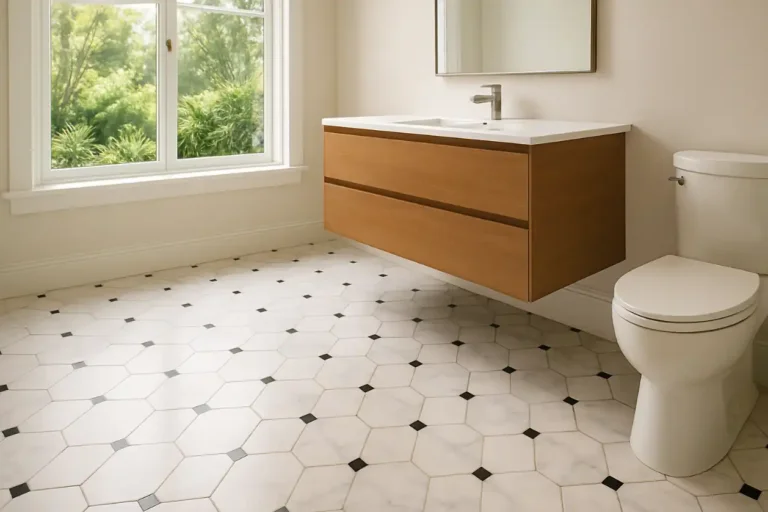
Ceramic vs. Porcelain for Floors
Both porcelain and non-porcelain ceramic can work on floors when the product is rated for that use.
Porcelain Makes Sense When
- you want a low-absorption tile
- the product is rated for a high-use floor
- the room sees frequent moisture
- you need a product with an exterior or freeze-thaw rating
- the design calls for dense stone-look, concrete-look, or wood-look tile
Non-Porcelain Ceramic Makes Sense When
- the tile is rated for the intended floor
- you want an easier-to-cut product for a suitable DIY project
- the room is indoors and the product specifications fit the traffic and moisture
- you prefer a particular glaze, color, shape, or format that is not available in porcelain
For room-by-room planning, see Floor Tile Ideas: Best Types, Patterns & Buying Guide.
Ceramic vs. Porcelain for Shower Floors
Do not choose shower-floor tile by material name alone.
ANSI A326.3 provides a product-use classification system for hard-surface flooring, including Interior Dry, Interior Wet, Interior Wet Plus, Exterior Wet, and Oils/Greases. TCNA warns that a measured DCOF value should not be the only factor used to decide whether a surface is appropriate. See TCNA’s DCOF FAQ.
For a shower floor, confirm:
- the tile is approved for shower-floor or standing-water use
- the product-use classification fits the application
- the tile size works with the planned drainage slope
- the grout-joint recommendation is compatible with the layout
- the complete waterproofing and drain system is designed correctly
Tile itself is only the visible finish. The waterproofing system behind it is a separate part of the shower assembly.
See Shower Tile Ideas and the Shower Tile & Bathroom Finishes edit for wet-area planning.
Ceramic vs. Porcelain for Bathroom Walls
Bathroom walls do not have the same foot-traffic demands as floors. That opens the door to a much wider range of glazed ceramic, porcelain, mosaic, handmade-look, and decorative tiles.
For a dry bathroom wall or vanity backsplash, non-porcelain ceramic may be an easy, attractive choice. For a shower wall, verify the product’s wet-area use and follow the tile, setting-material, waterproofing, and grout instructions for the system.
For compact-room ideas, see Small Bathroom Tile Ideas.
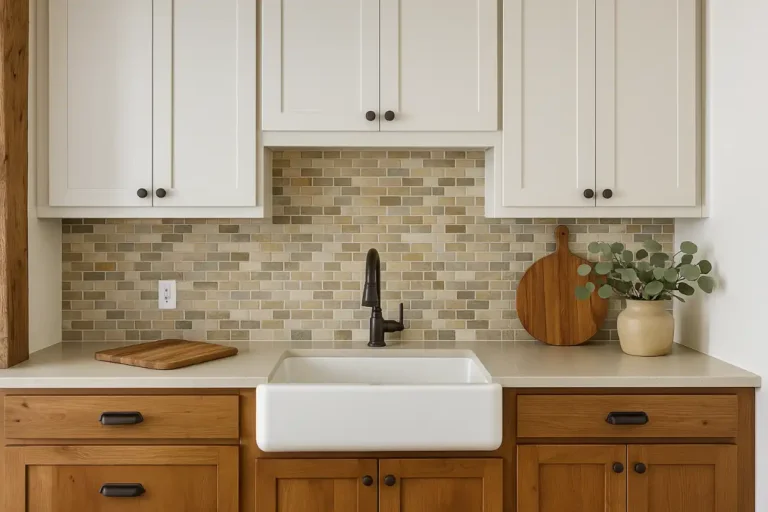
Ceramic vs. Porcelain for Kitchen Backsplashes
A backsplash usually does not need the same mechanical performance as a floor. Glazed ceramic is popular because it is available in many colors, formats, and surface effects and is often easier to cut.
Porcelain can also work well, especially when the backsplash is designed to coordinate with a porcelain floor or countertop-look slab.
The choice should come down to:
- surface finish and cleanability
- edge pieces and trim
- cutting requirements around outlets and cabinets
- manufacturer installation instructions
- heat and clearance requirements from the appliance manufacturer
Use DIY Backsplash for project planning.
Ceramic vs. Porcelain Outdoors
Porcelain is often chosen outdoors because of its low water absorption, but TCNA explicitly states that porcelain is not the only tile suitable for exterior applications.
The manufacturer should rate the exact tile for exterior use. In freeze-thaw climates, confirm frost resistance. The installation also needs adequate drainage, slope, substrate preparation, and setting materials designed for the exposure. See TCNA exterior-installation considerations.
Do not use the shortcut “porcelain = outdoor safe” or “ceramic = indoor only.”
Glazed vs. Unglazed Porcelain
Porcelain can be glazed or unglazed.
TCNA notes that glazed porcelain is often easier to clean because the glaze fills microscopic surface openings. Unglazed porcelain may offer different surface characteristics, including potentially stronger slip performance in some products.
Neither category should be treated as universally better. Compare the exact finish, use rating, care instructions, and the room.
What “Through-Body Porcelain” Means
Through-body usually refers to unglazed porcelain where the body color continues through the tile. That can make wear or small chips less visually obvious because there is not a contrasting glaze layer over a different-colored body.
Do not assume every porcelain tile is through-body. Many porcelain tiles are glazed.
Which Is Easier to Cut and Install?
TCNA notes that porcelain is generally harder to cut and harder to bond than non-porcelain ceramic. That does not mean porcelain always requires professional installation, but dense tile, large formats, complex layouts, or specialty materials can raise the skill and tool requirements.
A manual score-and-snap cutter may work for some ceramic and porcelain products. Other products need a wet saw, grinder, hole saw, or specialty blade. Follow the tile and tool manufacturer’s guidance rather than assuming one cutting method works for every tile.
For layout complexity, use the Tile Layout Patterns planner.
Maintenance: Neither Category Has One Universal Rule
Do not seal tile simply because the label says “ceramic,” and do not assume porcelain never needs any surface treatment.
Maintenance depends on whether the product is glazed or unglazed, polished or textured, the grout system, the room, and the manufacturer’s instructions.
- Glazed ceramic usually relies on its fired glaze as the finished surface.
- Glazed porcelain likewise has a glaze layer.
- Some unglazed or polished products may have manufacturer-specific care or treatment recommendations.
- Grout maintenance is a separate issue from the tile body.
Use the care instructions for the exact tile and grout products you install.
Cost: Porcelain Is Not Always More Expensive
Porcelain often costs more to manufacture because achieving very low water absorption requires specific raw materials and tightly controlled firing. TCNA notes this can make true porcelain more expensive than a comparable non-porcelain product.
Retail price is still driven by much more than material category:
- brand
- size and thickness
- glaze or surface effect
- printing and pattern complexity
- country of manufacture
- format and edge treatment
- specialty performance
- shipping and availability
A designer ceramic wall tile can cost more than a basic porcelain floor tile. Compare the actual products rather than relying on a fixed price-per-square-foot rule.
For installation planning, see Tile Installation Cost in 2026.
How to Tell If a Tile Is Really Porcelain
TCNA notes that some products have historically been marketed as porcelain without meeting the standard.
Porcelain is defined as ceramic tile with water absorption of 0.5% or less as measured by ASTM C373. Products carrying the Porcelain Tile Certification Agency mark have been independently tested for that requirement. See TCNA’s porcelain certification guidance.
Ceramic vs. Porcelain by Project
| Project | Start With | Then Verify |
|---|---|---|
| Kitchen floor | Porcelain or floor-rated ceramic | Traffic/use rating, cleaning, layout, substrate |
| Bathroom floor | Floor-rated porcelain or ceramic | Wet-area use, DCOF/product-use classification |
| Shower floor | Product approved for shower floors | Wet-use classification, slope, waterproofing system |
| Shower wall | Wet-area-approved ceramic or porcelain | Waterproofing, mortar, grout, edge treatment |
| Kitchen backsplash | Glazed ceramic or porcelain | Cleanability, cuts, trim, appliance guidance |
| Exterior patio | Exterior-rated tile | Frost rating, drainage, climate, setting system |
Buying Checklist
- Is the product porcelain or non-porcelain ceramic?
- What is its manufacturer-stated area of use?
- Is it approved for floors if you are using it underfoot?
- Is it approved for wet or shower-floor use if relevant?
- What product-use or DCOF information is published?
- Is it exterior- and frost-rated if the project is outside?
- Is the tile glazed or unglazed?
- What cutting tools are recommended?
- What grout-joint width and layout limitations apply?
- What mortar or adhesive system is specified?
- What cleaning and maintenance instructions apply?
- How will exposed edges and transitions be finished?
Plan Quantity Before You Order
Once the tile is chosen, calculate the actual room area, box coverage, layout, cuts, breakage allowance, and spare pieces.
- Use the Tile Calculator
- Compare floor-tile materials and patterns
- Plan the tile layout
- Decide whether to DIY or hire a tile installer
Ceramic vs. Porcelain Tile FAQs
Is porcelain tile ceramic?
Yes. Porcelain is a ceramic tile category defined by water absorption of 0.5% or less.
Is porcelain waterproof?
Porcelain has very low water absorption, but a tiled floor or shower is a complete assembly. Grout joints, waterproofing, substrate, penetrations, drainage, and installation details still matter.
Is porcelain always stronger than ceramic?
No universal rule covers every product. Porcelain is typically dense and durable, but non-porcelain ceramic products vary widely and can have very durable glazes. Check the product’s use and performance information.
Can ceramic tile be used on floors?
Yes, when the product is rated for floor use. Wall-only ceramic tile should not be assumed suitable underfoot.
Can ceramic tile be used outdoors?
Yes, some non-porcelain tiles are rated for exterior use. Check manufacturer exterior and frost-resistance information for the exact product.
Is porcelain always better for a shower floor?
No. Use tile specifically approved for shower floors and evaluate the product-use classification, drainage layout, tile size, grout joints, maintenance, and waterproofing system.
Does porcelain need sealing?
There is no universal porcelain-sealing rule. Follow the exact product and grout manufacturer’s care instructions.
Which is easier for DIY installation?
Non-porcelain ceramic is often easier to cut and bond, but the difficulty depends on tile size, thickness, layout, substrate, cutting requirements, and the installation system.