DIY Home Improvement: How to Plan Safer, Smarter Projects
Quick answer: The best DIY home-improvement projects are the ones you can define, measure, prepare, and complete without guessing about structural, electrical, plumbing, gas, waterproofing, lead, or code requirements. Painting, removable decor, simple hardware changes, shelving, and some surface finishes can be good starting points. Projects that disturb old paint, alter wiring, change plumbing, affect waterproofing, or modify structure need more caution.
| Project Type | Good DIY Starting Point? | What to Check First |
|---|---|---|
| Interior painting | Often | Surface condition, old paint, product instructions, ladder safety |
| Wallpaper | Often | Wall prep, pattern repeat, product compatibility |
| Decorative wall panels | Sometimes | Panel system, substrate, outlets, moisture, attachment method |
| Tile backsplash | Sometimes | Substrate, appliance clearances, setting materials, layout |
| Floor tile | Intermediate | Substrate flatness, layout, transitions, wet-area use |
| Electrical changes | Often professional territory | Local rules, permits, circuit conditions, qualified electrician |
| Plumbing changes | Often professional territory | Local rules, shutoffs, drainage, qualified plumber |
| Structural changes | No casual DIY shortcut | Engineering, permits, load paths, qualified professionals |
If you are planning paint, tile, or wallpaper, start with the site’s calculators before buying materials:

Start With Projects That Have a Clear Finish Line
A beginner project is easier to control when you can describe the finished result in one sentence.
Examples:
- paint one bedroom
- install removable wallpaper on one feature wall
- replace cabinet pulls using the existing holes
- hang a shelf into known framing with the correct hardware
- install a decorative wall-panel system according to the manufacturer
“Renovate the kitchen” is not one project. It is a cluster of decisions involving surfaces, plumbing, electrical work, cabinets, appliances, flooring, ventilation, and sometimes structural changes.
DIY Project #1: Interior Painting
Painting is a useful entry project because the planning steps are visible: measure, repair, clean, sample, protect, paint, and inspect.
Do not assume every room needs exactly two coats or that every gallon covers the same area. Use the product label and actual surface condition.
- Prep Walls for Painting
- How to Use a Paint Calculator
- Best Tools for Painting Walls
- Paint Types & Finishes
Older painted surfaces need a lead check
EPA warns that renovation, repair, and painting work in pre-1978 homes can create dangerous lead dust when lead-based paint is present. EPA recommends homeowners hire a lead-safe certified contractor for renovation work in pre-1978 homes; DIYers who proceed should follow lead-safe work practices. See EPA lead-safe guidance for DIYers.
Do not start aggressive sanding or demolition on old painted surfaces without considering lead first.
DIY Project #2: Wallpaper
Wallpaper is a good DIY candidate when the wall is sound, the product is compatible with the surface, and the pattern is manageable.
The biggest planning mistake is buying by wall square footage alone. Pattern repeat and matched drops can change roll requirements.
- Wallpaper Calculator
- Prep Walls for Wallpaper
- Install Peel-and-Stick Wallpaper
- Aesthetic Wallpaper Ideas
For renters, landlord permission and the product’s surface instructions matter. “Removable” does not guarantee damage-free removal from every paint, texture, or wall condition.
DIY Project #3: Decorative Wall Panels
Fluted, reeded, slat, acoustic, and tambour panels can add architectural texture, but the systems are not interchangeable.
Before installing panels, check:
- wall flatness
- panel dimensions
- outlets and switches
- edge treatment
- manufacturer-approved attachment method
- moisture suitability
- how heavy objects will be supported
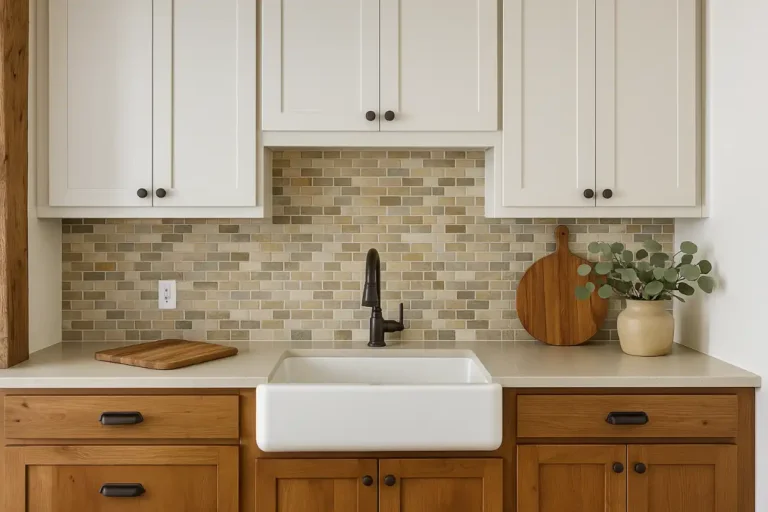
DIY Project #4: Tile Backsplash
A backsplash can be manageable when the substrate is sound and the project does not involve unresolved moisture, damaged drywall, electrical changes, or unusual appliance conditions.
Do not make up grout-joint, mortar, trowel, or heat-clearance rules. Use the tile, setting-material, grout, and appliance manufacturers’ instructions.
Floor Tile: A Bigger Step Up
Floor tile demands more from the substrate and layout than a small decorative backsplash.
Before deciding it is a DIY project, check:
- subfloor or slab condition
- flatness
- finished floor height
- movement joints
- transitions
- wet-area suitability
- cut complexity
- tile size and weight
Use DIY or Hire a Tile Installer? as the decision guide before committing.
Smart Thermostats: Savings Are Real, Installation Is Not Universal
ENERGY STAR says certified smart thermostats save about 8% of heating and cooling bills on average, or roughly $50 per year, with actual savings depending on climate, occupancy, preferences, and HVAC equipment. See ENERGY STAR’s current smart-thermostat FAQ.
That does not mean every thermostat swap is a simple DIY wiring job. Compatibility, control voltage, heat pumps, multi-stage systems, common-wire needs, and local requirements can change the installation. Use the thermostat manufacturer’s compatibility and installation guidance, and hire a qualified HVAC/electrical professional when the system is unclear.
Projects That Deserve More Caution
Electrical Work
Replacing a cover plate is not the same thing as altering a circuit. New wiring, service changes, panel work, added circuits, and unfamiliar electrical conditions belong in a different risk category than decorating work.
Permit and licensing rules vary by location. Check the authority having jurisdiction before assuming electrical work is exempt.
Plumbing
Changing a decorative fixture can quickly become plumbing work when valves fail, supply lines are damaged, drains move, or walls/floors are opened.
For concealed plumbing, drain changes, gas appliances, or unfamiliar shutoff conditions, professional help can prevent a small project from becoming a water-damage claim.
Structural Work
Do not remove walls, alter framing, cut structural members, change beams, or modify load paths from a generic DIY tutorial.
Waterproofing
Showers and other wet assemblies need compatible waterproofing, drainage, penetrations, and transitions. Decorative tile is not the waterproofing layer.
How to Decide: DIY or Hire?
DIY is a better fit when:
- the scope is easy to define
- the instructions are product-specific and clear
- the project can be stopped safely
- mistakes are visible and repairable
- there is no structural, gas, electrical, lead, or concealed-water uncertainty
- you have the time to prep properly
Hiring help becomes more attractive when:
- the project has expensive failure modes
- code or permits may apply
- the work is hidden behind finishes
- special testing or certification is involved
- the project depends on several trades
- your schedule cannot absorb delays
For painting, see DIY or Hire a Painter?.
Budget With Scope, Not a Universal Savings Percentage
There is no defensible rule that DIY automatically saves 40%, 50%, or 60%.
DIY removes some labor cost but can add:
- tool purchases or rentals
- delivery
- waste
- rework
- disposal
- extra material from mistakes
- lost time
Compare the actual project scope. For contractor quotes, use the Contractor Estimate Comparison Worksheet.
Build a Starter Tool Kit Around Projects You Actually Do

A practical starter kit often includes:
- tape measure
- level
- utility knife
- basic screwdrivers
- drill/driver
- stud finder
- appropriate eye protection
- work light
- vacuum or cleanup tools suited to the project
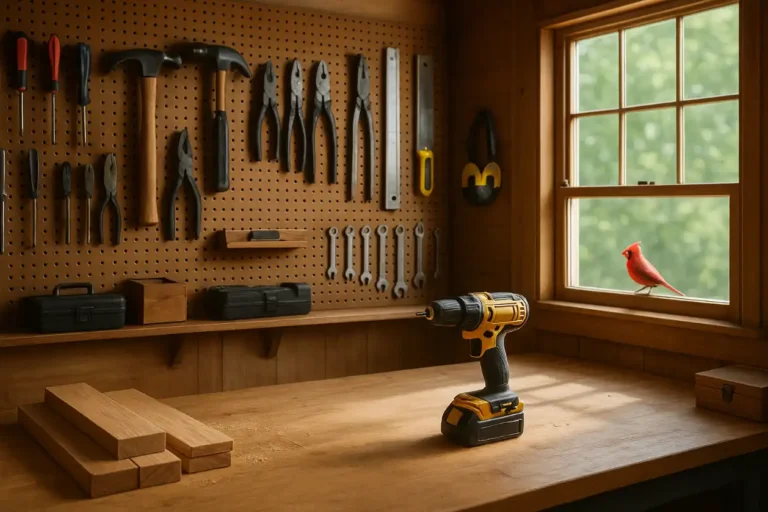
Buy project-specific tools only when the job needs them. See Must-Have DIY Home Tools for the fuller project-by-project list.
Compare basic home-improvement tool kits
Affiliate disclosure: As an Amazon Associate, Cardinal Decor earns from qualifying purchases. Tool suitability and safety depend on the actual project.
A Better DIY Planning Sequence
- Define the outcome. One room, one surface, one repair.
- Inspect the existing condition. Look for damage, moisture, old coatings, movement, or hidden complexity.
- Check risk and rules. Ask whether lead, electrical, plumbing, gas, structural work, permits, or waterproofing are involved.
- Read the product instructions. Do this before buying the product.
- Measure. Use the appropriate calculator where available.
- Plan tools and disposal. Include cleanup, PPE, delivery, and waste.
- Decide whether the project is still DIY-friendly.
- Only then buy materials.
DIY Home Improvement FAQs
What is a good first DIY home-improvement project?
Interior painting, removable decor, simple hardware changes, and small non-structural installations are common starting points because the scope is visible and mistakes are usually easier to correct.
How much money can DIY save?
There is no universal percentage. Compare the actual professional quote with materials, tools, rentals, delivery, disposal, rework risk, and your time.
Do DIY projects need permits?
Some do. Rules vary by location and project type. Check local building, electrical, plumbing, and mechanical requirements before starting work that may be regulated.
Can I sand old paint myself?
For pre-1978 homes, lead-based paint may be present. EPA recommends lead-safe certified contractors for renovation work in these homes; DIYers who proceed should follow EPA lead-safe practices.
Are peel-and-stick products always renter-safe?
No. Adhesive products can react differently with paint age, sheen, texture, humidity, and wall prep. Get permission where required and test the product first.
Is a smart thermostat an easy DIY project?
Sometimes, but system compatibility and wiring vary. Use the manufacturer’s compatibility checker and installation instructions; hire a qualified professional when the HVAC controls are unclear.