DIY or Hire a Painter? How to Decide for Your Room
DIY painting is a reasonable choice for a manageable room with sound walls, safe access, and a flexible schedule. Hiring a painter becomes more useful when repairs, difficult access, detailed finishes, or a firm deadline drive the work. Decide on the full job, including preparation and cleanup, before comparing prices.
Start with the condition of the room
Walk around in daylight and list peeling paint, stains, cracks, damaged drywall, trim, and ceilings. A room that needs a color change is a different project from one that needs repairs before the first coat. Investigate recurring moisture or damaged surfaces before treating paint as the solution.
Older-home checkpoint: Before disturbing painted surfaces in a home built before 1978, review the EPA’s lead-safe renovation guidance. EPA recommends a lead-safe certified contractor for renovation, repair, or painting projects in these homes. Ordinary sanding or scraping can create hazardous lead dust when lead-based paint is present.
When DIY painting makes sense
- The surfaces are sound and the preparation is within your skills.
- You can reach the work safely with suitable equipment.
- You can move or protect furnishings and keep the work area available.
- You have time for preparation, coats, drying intervals, and cleanup.
- You are comfortable practicing cutting in and accepting some learning time.
A single room can be a useful starting point. Define a finish line before buying supplies: walls only, or walls plus ceiling, doors, and trim? Each added surface introduces preparation, materials, and detail work. Use our wall preparation guide to see what the work involves.
When to get a painter’s estimate
- Difficult access: Stairwells, tall ceilings, or areas where you cannot establish a safe working position.
- Substantial preparation: Widespread peeling, multiple drywall repairs, or an unclear coating problem.
- Demanding finishes: Detailed trim, cabinets, or highly visible surfaces where the finish standard matters more than practice time.
- A fixed deadline: A move, furniture delivery, or room that must return to service on an agreed date.
- A large scope: Several rooms, extensive protection, or a household that cannot accommodate a prolonged project.
Tell the painter about known damage and access constraints before accepting an estimate. Ask whether repairs are included or require another trade. Our drywall repair and paint cost guide explains the repair items to separate from painting.
Compare the same scope on both sides
A paint-only shopping total is not comparable to a quote that includes labor, repairs, protection, and cleanup. Write down the same rooms, surfaces, finish expectations, and preparation for both options.
Your DIY budget
- Paint and any primer required for the surface and coating system.
- Brushes, rollers, trays, protection, and preparation supplies you actually need.
- Equipment rental, delivery, taxes, and disposal where applicable.
- Your active work time and a contingency for repairs or additional materials.
Use the Paint Calculator to estimate paint quantity from dimensions, coats, coverage, and allowance. Its material estimate is a planning input, not a contractor quote. Check the selected product’s coverage information and account separately for surfaces outside your calculation.
Your professional quote
Request a written scope and price, including exclusions. Compare more than the total: two quotes may use different products, cover different repairs, or omit ceilings and trim. See our house painting cost guide for the factors that change pricing.
A useful calculation: Subtract your complete DIY cash budget from a professional quote for the same scope. That difference is the extra cash you would pay to hand over the agreed work. Weigh it against your available hours, disruption, and confidence in the result. It is not a guaranteed saving if your DIY scope leaves work unfinished.
Plan calendar time as well as work time
Separate moving and protection, preparation, priming if needed, painting, and cleanup. Then allow for the product’s drying, recoating, and curing instructions. Dry to the touch does not necessarily mean ready for another coat or normal use. Benjamin Moore’s room painting guidance advises checking the can for drying times and allowing proper curing before everyday use.
A painter also works within these product limits. Ask about crew size, expected working days, room access between visits, and what could change the schedule. Avoid assuming every room is a one-weekend project.
Questions to ask before hiring
- Which rooms and surfaces are included, and which are excluded?
- What preparation and repairs are included? How are hidden problems priced?
- Which paint line, sheen, primer, and number of coats are specified?
- Who moves furnishings and protects floors, fixtures, and adjoining areas?
- How will difficult access and any older painted surfaces be assessed?
- Who performs the work, and can you provide relevant insurance documentation and any required local credentials?
- What are the start date, estimated duration, and payment milestones?
- How are changes approved in writing before extra work starts?
- What cleanup, leftover paint labeling, walkthrough, and touch-ups are included?
- What written warranty applies, and what does it exclude?
Keep the answers with each estimate. If you plan to do some preparation yourself, agree on the exact tasks and acceptance standard before starting. Ask how that arrangement affects the quoted price and responsibility for the finish.
Make the decision
Choose DIY when the scope is safe, manageable, and fits your available time. Request professional estimates when preparation, access, or finish expectations exceed what you can comfortably handle. A split project can work too: you might paint an accessible room while a professional handles repairs or a stairwell, with responsibilities agreed in writing.
Start by measuring the room with the Paint Calculator, then use the questions above to compare the same scope. For more planning guides, visit Painting Resources.
Ready to compare quotes? Use our contractor estimate comparison guide and free worksheet to check the scope, allowances, exclusions, and payment terms.
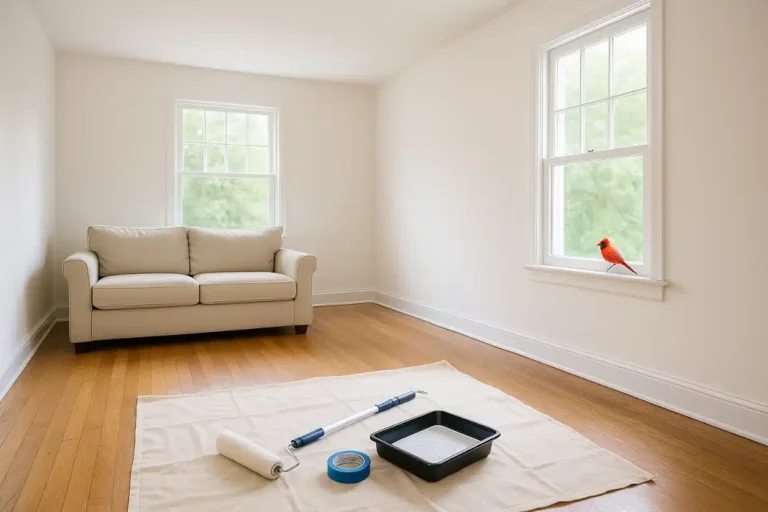
Featured image: AI-generated editorial illustration created for Cardinal Decor. It is a planning concept, not a photograph of a completed project or a technical installation diagram.