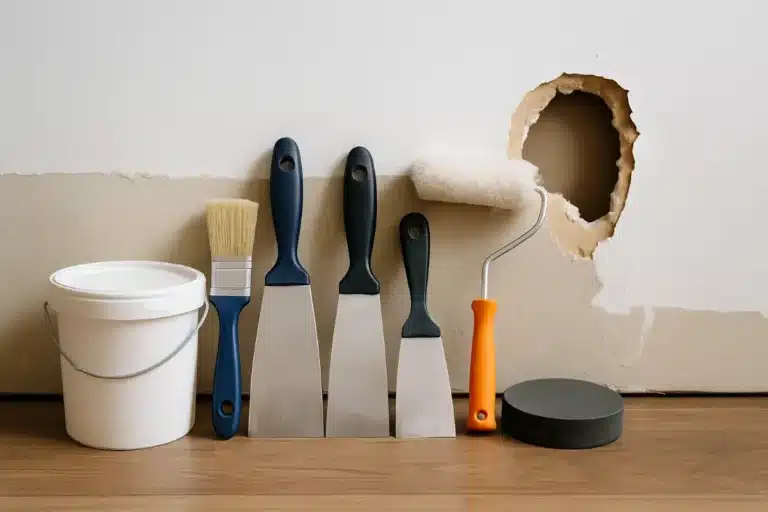
Eco-Friendly Home Renovations: 12 Lower-Waste Upgrades for 2026
Quick answer: Eco-friendly home renovation is not one product category. The strongest upgrades usually do one or more of these things: reduce material waste, extend the life of what you already own, lower ongoing energy or water use, avoid unnecessary demolition, choose durable finishes, and dispose of leftover materials responsibly.
For Cardinal Decor projects, that often means better planning before you buy paint, tile, wallpaper, or tools. A correctly measured project can prevent over-ordering just as effectively as buying a product marketed as “green.”
| Upgrade | Why It Can Be Lower-Waste | Best Next Step |
|---|---|---|
| Repaint instead of replace | Extends the useful life of walls, trim, cabinets, and some built-ins | Measure paint before buying |
| Keep sound tile and repair selectively | Avoids unnecessary demolition | Inspect substrate and match replacement tile |
| Use wallpaper strategically | Limits material to one room or feature zone | Calculate matched-drop rolls first |
| Reuse leftover paint | Keeps usable material in circulation | Store, share, or use PaintCare options |
| Smart thermostat | Can reduce heating/cooling energy use | Check HVAC compatibility |
| Efficient windows when replacement is already justified | Can reduce energy loss | Compare climate-zone ratings |
1. Start With Better Material Planning
The least glamorous sustainability move may be the most practical: buy closer to what the project actually needs.
Over-ordering can create leftover paint, unopened tile boxes, extra wallpaper rolls, and unused tools that never get returned or reused.
These are planning estimates, not guarantees. Use product-specific coverage, pattern repeat, box coverage, and installation guidance when available.
2. Repaint Sound Surfaces Before Replacing Them
If walls, trim, doors, or cabinet boxes are structurally sound, repainting can extend their useful life without the demolition and disposal of full replacement.
That does not mean painting is always the right fix. Water damage, failing substrates, peeling thermofoil, structural damage, or incompatible existing finishes can make replacement or repair more appropriate.
For cabinet decisions, see Kitchen Cabinet Painting Cost in 2026.
3. Be Careful With “Low-VOC” and “Zero-VOC” Marketing
EPA warns that a “low VOC” or “no VOC” label does not automatically mean a product is safer for indoor air. VOC regulations are partly based on atmospheric ozone formation, not a complete toxicity ranking, and products with low total VOC can still contain chemicals of concern. See EPA’s current VOC guidance.
When choosing paint:
- read the product label and safety data
- follow ventilation instructions
- compare durability as well as VOC claims
- avoid buying a coating only because the front label says “eco”
A coating that lasts longer and performs correctly may create less waste than one that needs early repainting.
4. Store, Reuse, or Properly Dispose of Leftover Paint
PaintCare operates paint stewardship programs and a nationwide locator that includes PaintCare collection sites plus household hazardous-waste options in other areas. Availability and accepted products vary by location, so call ahead before drop-off. Find a paint drop-off option.
PaintCare also promotes paint reuse through its PaintShare program, where good-quality leftover paint may be made available for reuse rather than processed as waste. See PaintShare.
Before disposal, consider whether the leftover material can be:
- kept for touch-ups
- used on a small compatible project
- shared with a neighbor or community group
- taken to an approved reuse or collection site
5. Repair Tile Instead of Demolishing a Whole Surface
If the tile field and substrate are sound, replacing isolated damaged pieces can preserve a larger installation.
Keep spare tile from the same production lot when possible. Shade, caliber, finish, and dimensions can change between production runs.
Before replacing a cracked tile, find out why it cracked. Movement, substrate problems, impact, or installation defects may need attention first.
See Floor Tile Ideas and Buying Guide for material and room-use planning.
6. Choose Durable Tile for the Actual Location
A durable product used in the wrong location is still a bad choice.
For floors, wet areas, showers, and exterior projects, check the exact tile’s intended use, water absorption, wet-area guidance, frost information, finish, and maintenance requirements.
Buying once for the correct application is usually a better lower-waste strategy than choosing a trendy tile that fails early.
7. Use Wallpaper Where It Adds the Most Value
Wallpaper does not have to cover an entire house.
Using it in a powder room, dining room, built-in, ceiling, or feature wall can create the visual effect you want with less material than full-room coverage.
Pattern repeat can create substantial cut waste, so calculate rolls from the actual product dimensions and repeat rather than using wall square footage alone.
8. Reuse Existing Wood and Cabinetry When It Is Sound
Keeping usable cabinet boxes, wood doors, shelving, trim, and flooring can reduce demolition and new-material demand.
Refinishing, repainting, repairing, or reconfiguring may be worth pricing before full replacement.
That decision is not automatic. Swollen particleboard, severe water damage, structural failure, or an unusable layout can make reuse impractical.
9. Consider an ENERGY STAR Smart Thermostat
ENERGY STAR reports that certified smart thermostats save about 8% on heating and cooling bills on average, roughly $50 per year, with savings varying by climate, occupancy, equipment, and comfort settings. See ENERGY STAR’s current smart-thermostat data.
Check HVAC compatibility before buying. Heat pumps, multi-stage systems, control voltage, and common-wire requirements can affect installation.
10. Replace Windows for Performance, Not Just Appearance
Replacing functional windows only for style can create a large material project. Replacement makes more sense when the existing windows have real performance, operation, water, or comfort problems.
ENERGY STAR says certified windows can lower household energy bills by an average of up to 13% nationwide when replacing single-pane windows. Actual savings depend on climate, the existing windows, installation, and the new product. See ENERGY STAR window guidance.
Use the ENERGY STAR climate-zone information for product selection rather than assuming one window specification works everywhere.
11. Reduce Demolition Before You Buy “Green” Replacement Materials
A renovation can use recycled-content products and still create unnecessary waste if perfectly usable finishes are removed first.
Before demolition, ask:
- Can this surface be cleaned?
- Can it be repaired?
- Can it be repainted?
- Can it be refinished?
- Can only the damaged section be replaced?
- Can materials be salvaged or reused elsewhere?
Sometimes the greener purchase is no purchase.
12. Buy Fewer One-Project Tools
Specialty tools can make a job easier, but buying equipment for one afternoon is not always efficient.
Consider:
- renting a tile saw
- borrowing a specialty ladder or tool where safe and permitted
- buying a durable general-purpose tool you will actually reuse
- hiring the project when the rental/tool/prep cost erases the DIY advantage
See Must-Have DIY Home Tools for the starter-kit approach.
Eco-Friendly Renovation Claims to Treat Carefully
“Low VOC means non-toxic”
Not necessarily. EPA explicitly warns against using VOC level as a complete toxicity measure.
“Natural material is always greener”
Material extraction, transport, maintenance, lifespan, installation, and replacement frequency all matter.
“New is automatically more efficient”
Sometimes. But replacing a functioning component creates material and disposal impacts too. Compare the expected performance gain with the condition of what you already have.
“DIY always reduces environmental impact”
Not when mistakes cause rework, wasted material, water damage, unsafe disposal, or early replacement.
A Lower-Waste Renovation Planning Checklist
- Define the problem you are fixing.
- Decide whether the existing material can be repaired or refinished.
- Measure before buying.
- Choose a product approved for the actual location.
- Check expected maintenance and service life.
- Plan leftover material storage, reuse, return, or disposal.
- Rent or borrow specialty tools when practical.
- Check current local incentives only when the upgrade qualifies.
- Use local code and permit requirements for regulated work.
- Compare professional estimates when project failure would be expensive.
What Do Sustainable Home Renovations Cost in 2026?
There is no useful single “eco-friendly renovation cost.” A lower-waste repaint, a smart thermostat, window replacement, insulation work, tile repair, and a full energy retrofit are completely different scopes.
Build the budget by separating:
- materials: paint, tile, wallpaper, insulation, windows, fixtures, or equipment
- prep and repair: substrate work, patching, demolition, disposal, or cleaning
- labor: installation, licensed trades, or specialty work
- tools and rentals: saws, sprayers, ladders, containment, or testing equipment
- delivery and disposal: freight, haul-away, recycling, or hazardous-waste handling
- future operating cost: energy, water, maintenance, replacement parts, and service life
For paint, tile, and wallpaper projects, start with Cardinal Decor’s calculators so material quantity is not guessed. For contractor work, compare identical scopes with the Contractor Estimate Comparison Worksheet.
2026 Federal Home-Energy Tax Credit Reality
Do not budget a 2026 renovation around the old federal home-energy credits.
The IRS says the Energy Efficient Home Improvement Credit under Section 25C is not allowed for property placed in service after December 31, 2025. The Residential Clean Energy Credit under Section 25D is also not available for expenditures made after December 31, 2025. The termination dates were accelerated by Public Law 119-21. See current IRS 25C guidance · See current IRS 25D guidance · See IRS termination-date FAQs.
State, utility, local, manufacturer, or program-specific rebates may still exist. Verify current eligibility directly with the program before assuming an incentive belongs in the budget.
Plan the Project Before Shopping
- DIY Home Improvement Planning Guide
- Paint Calculator
- Tile Calculator
- Wallpaper Calculator
- Compare Contractor Estimates
Eco-Friendly Home Renovation FAQs
What is the most eco-friendly home renovation?
There is no single answer. Repairing or extending the life of a sound existing material can be lower-waste than replacing it. Energy-saving upgrades can also reduce ongoing resource use. The best choice depends on the problem being solved.
Are low-VOC paints always safer?
No. EPA says low- or no-VOC labels do not guarantee a product is less toxic. Compare the full product information and follow ventilation and safety instructions.
What should I do with leftover paint?
Keep usable paint for touch-ups, reuse it on a compatible project, share it, or check PaintCare/local household hazardous-waste options. Do not assume every retailer accepts leftover paint.
Do smart thermostats really save energy?
ENERGY STAR says certified smart thermostats save about 8% on heating and cooling bills on average, with actual results varying by household and HVAC system.
Should I replace old windows to make my home greener?
Replacement can improve energy performance when existing windows are inefficient or failing. ENERGY STAR reports average savings of up to 13% when certified windows replace single-pane windows, but the actual result depends on climate, installation, and existing conditions.