Rustic Farmhouse Living Room Colors for Brown Leather Sofas
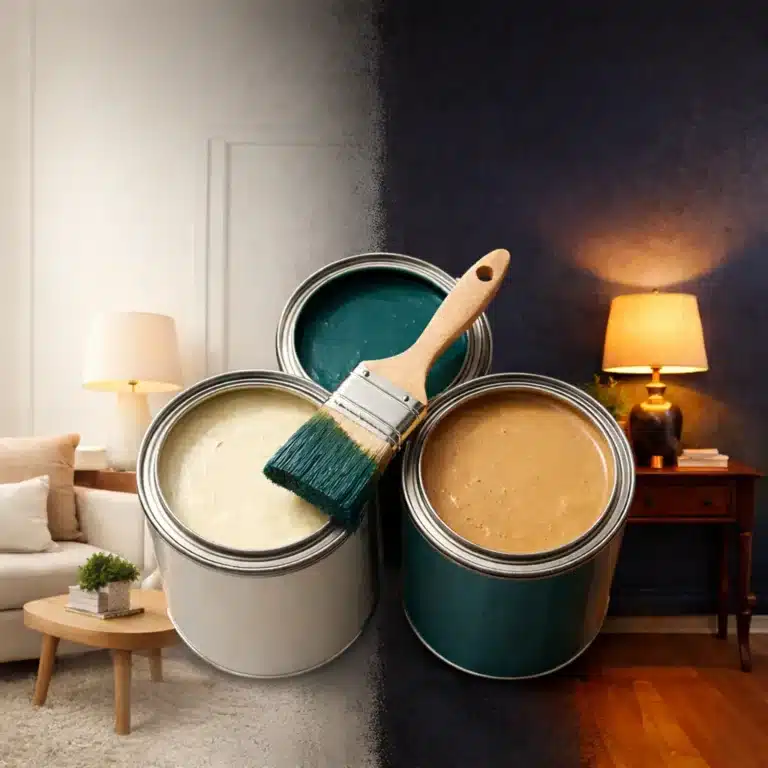
Choosing farmhouse living room colors for a brown leather sofa starts with the furniture you already own. Building on our guide to rustic farmhouse paint colors, these three palettes pair warm cream and olive, mushroom and linen, or dusty blue and warm white with brown leather. Start with the largest surfaces around your sofa: walls, rug, curtains, and the wood that is staying.
Quick answer: For a rustic farmhouse living room with a brown leather sofa, try warm cream with olive accents, mushroom with linen, or muted blue with warm white. Choose the direction beside your actual leather and flooring. These are styling starting points, not guaranteed paint matches.
Start With the Brown You Already Own
Look at an area of leather away from direct glare. Does it read golden and caramel, red-brown, deep chocolate, or gray-brown? Bring a light neutral fabric beside it and compare. This is a practical visual check, not a formal color measurement.
| Sofa appearance | Palette to sample | What to watch |
|---|---|---|
| Cognac or caramel | Warm cream, muted olive, oatmeal | Strong yellow walls may repeat more warmth than you want. |
| Chocolate brown | Mushroom, linen, soft black | Keep some light contrast between sofa, rug, and wall. |
| Reddish brown | Soft off-white, muted blue, natural linen | Compare blues in the room; a vivid blue may feel stronger than the intended palette. |
| Gray-brown | Warm putty, cream, subdued green | Check whether the proposed wall color looks pink or yellow beside the leather. |
1. Warm Cream, Olive, and Cognac
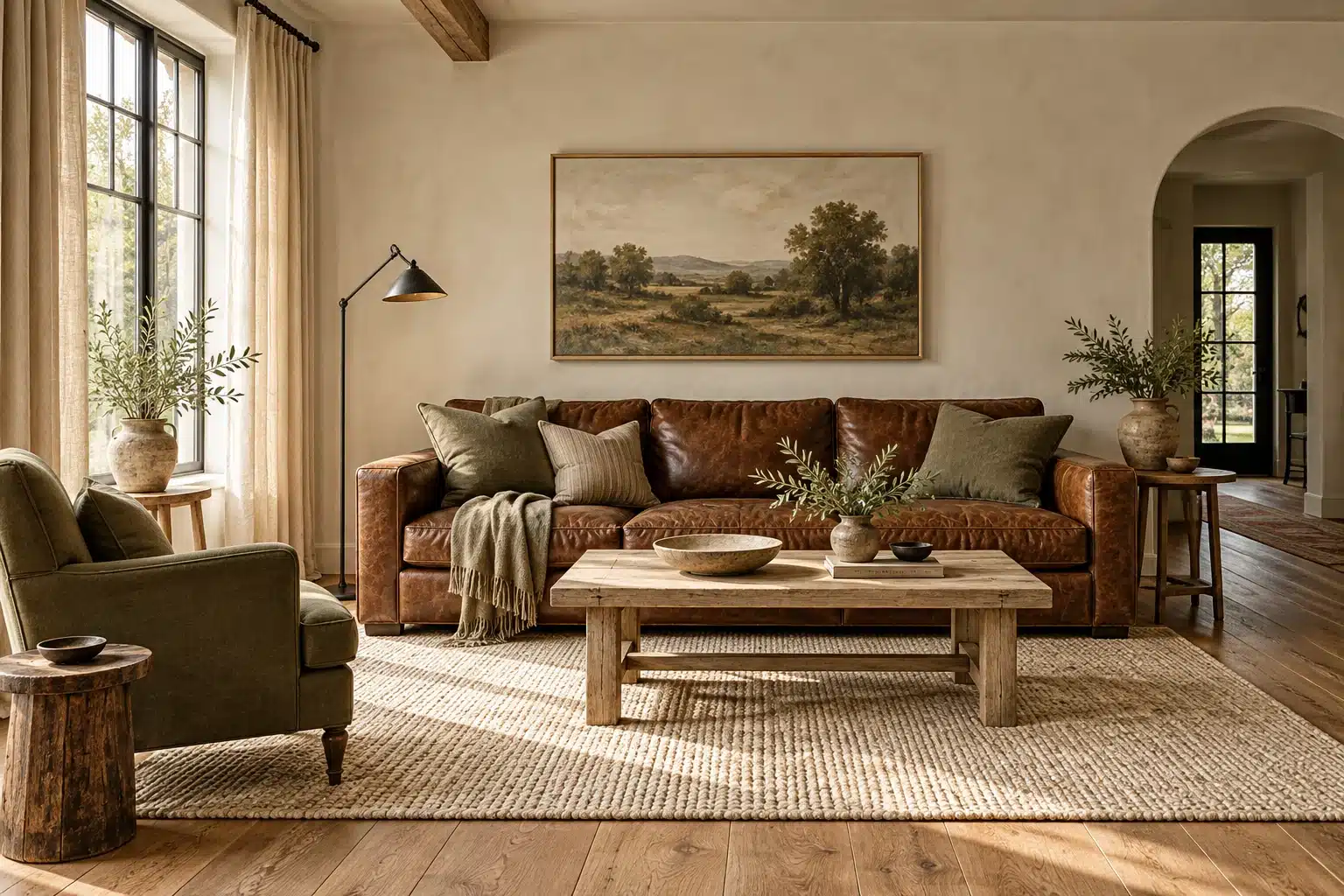
This is the first combination I would sample for a caramel leather sofa beside oak floors. Let cream occupy the walls and use olive on a chair, curtains, or a painted cabinet. An oatmeal rug separates the sofa from a similarly colored floor.
For the window treatment, compare curtain colors for a brown couch, including olive, cream and oatmeal options with guidance on fabric and light control.
Keep the largest fabric pattern quiet. A faded olive-and-cream rug can introduce the accent without requiring green on every surface. Choose one dark note, such as an iron lamp or a dark wood frame, to give the pale background definition.
Try this arrangement: cream walls, cognac sofa, oatmeal rug, olive cushions, and a wood coffee table with a visibly different tone from the leather. Hold a trim sample beside the wall sample before buying either paint.
2. Mushroom, Linen, and Chocolate Brown
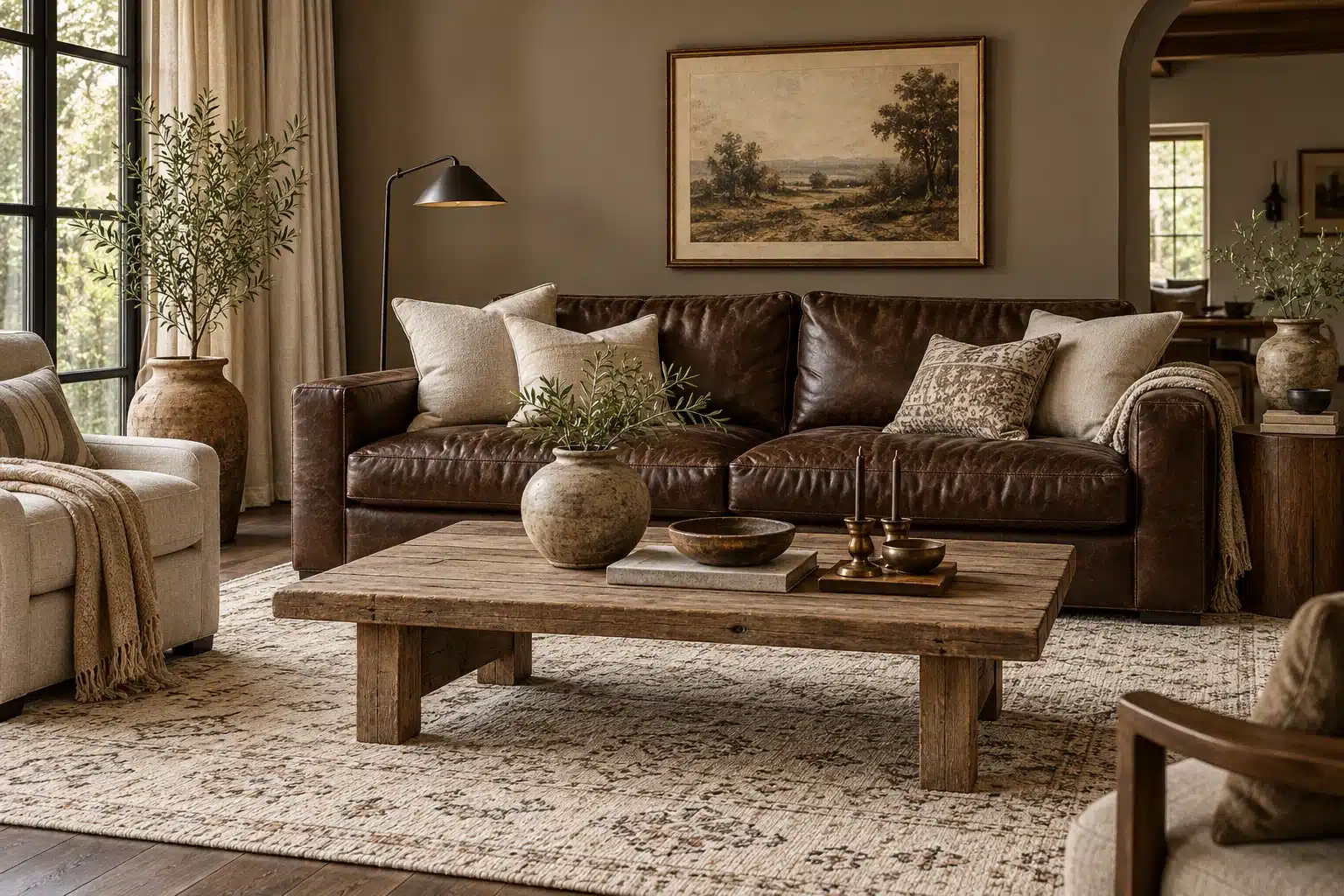
A deep brown sofa can be the anchor in a quieter room. Sample a mushroom wall color, add light linen curtains, and compare rug colors for a brown couch and wood floors to keep the sofa distinct from the floor. Then choose throw pillow colors that connect the couch, rug and curtains.
Mushroom is a broad color description, not one dependable formula. Compare several actual samples against the leather and existing trim. If the wall sample seems unexpectedly pink, green, or violet beside your furniture, choose another direction rather than buying accessories to correct it.
Try this arrangement: mushroom walls, chocolate sofa, flax curtains, a cream-and-brown patterned rug, and a small amount of black metal. Avoid making every wood piece the same dark brown.
3. Dusty Blue, Warm White, and Brown Leather

For a room that already contains plenty of brown wood, muted blue offers a different direction. Start with a blue-gray or softened blue-green sample rather than a bright blue. Use warm white or linen elsewhere to keep the palette connected to the farmhouse materials.
You do not have to paint the whole room blue. A cabinet, a pair of cushions, or curtains can carry the color while walls remain neutral. This is useful when you like the combination but want to keep the painting project small.
Try this arrangement: warm off-white walls, brown sofa, dusty blue curtains, a cream rug with a restrained blue pattern, and a weathered wood table.
How Do You Keep the Room From Feeling Too Brown?
Look for places where the leather, floor, and furniture merge into one large area of similar color. Changing a small cushion may not be enough. Separate at least one major boundary: put a lighter rug beneath the seating, use a wall color visibly different from the sofa, or compare a coffee table with a different lightness.
For example, a chocolate sofa on a dark wood floor may need a cream-based rug before it needs new curtains. A caramel sofa beside golden flooring may benefit from a muted patterned rug that introduces a quieter color. These are design experiments to sample, not promises that all brown rooms need pale accessories.
Inspect the room from its main entrance and from the sofa itself. The entrance shows the overall balance; the seated view tells you whether the room is pleasant to use. Keep the changes that improve both.
Build the Room in a Useful Buying Order
Give each purchase a job before adding it to the room. This avoids buying several attractive pieces that do not solve the same decorating problem.
- Keep the sofa and fixed finishes as the starting point. Photograph the whole room for reference, but make final comparisons beside the actual materials.
- Choose the large textile direction. Compare a rug sample and curtain fabric with the leather and floor. If the rug contains several colors, select one quieter color to repeat elsewhere.
- Sample the wall and trim together. Include the existing wood casing or painted trim. Confirm the wall color before ordering a full paint quantity.
- Choose the main accent. Give olive or dusty blue one substantial place, such as a chair or curtains, or repeat it in a smaller pair of elements. You do not need to buy every accessory in that color.
- Finish with the smallest pieces. Pillows, throws, and art can connect decisions already made. Stop when the room feels coherent rather than filling every available surface.
If you are changing only one thing this month, choose the item responsible for the largest mismatch. That might be a rug that disappears into the sofa and floor, or curtains whose white looks harsh beside the walls. A small, targeted change can be more useful than a collection of unrelated new accents.
What Gives the Palette a Farmhouse Character?
The palette supplies the color relationships; materials and shapes give the room its character. Try woven fabric, a wood table with visible grain, simple pottery, or a vintage piece you actually enjoy. Keep enough variation in texture that cream, linen, and mushroom do not become a flat collection of nearly identical surfaces.
You do not need distressed finishes on every piece or decorative signs to establish the style. If the leather already looks worn and the floor has strong grain, a simpler curtain and quieter rug can balance those textures. If the sofa is smooth and the room feels bare, compare a more tactile fabric before adding another paint color.
Resolve These Common Palette Problems
- Cream walls look yellow beside the sofa: compare a less yellow off-white with the actual leather and trim. Judge it under the lamps used at night.
- Mushroom looks pink beside the wood: try a different neutral rather than buying green accessories solely to correct the wall.
- Blue feels too cold: compare a more muted sample and include the rug and curtain fabric. Keep the blue as a smaller accent if you like it only in limited amounts.
- The room feels busy: remove a small pattern or accent temporarily. Keep the rug, curtains, and pillows from all demanding equal attention.
When the sofa room opens into another space, use the room-to-room paint palette method to compare the shared doorway before finalizing the walls.
Choose the Rug Before Buying More Small Decor
The rug can connect colors that look unrelated when viewed separately. Place fabric or rug samples beside the sofa and flooring, then compare paint samples with all three. If the leather and floor are close in color, a lighter rug is one way to create a visible boundary around the seating.
Use a repeated color with purpose. An olive note in a rug and one cushion may be enough. You do not need olive curtains, lamps, artwork, and every cushion too.
Keep Wood Trim in the Decision
If the room has unpainted wood trim, treat it as a permanent part of the palette. Compare wall samples beside a door casing as well as behind the sofa. Cream that looks pleasant beside leather may read differently beside golden oak or reddish trim.
For a wider set of combinations, see rustic farmhouse paint colors and warm neutral paint colors.
Test the Palette Where You Will Live With It
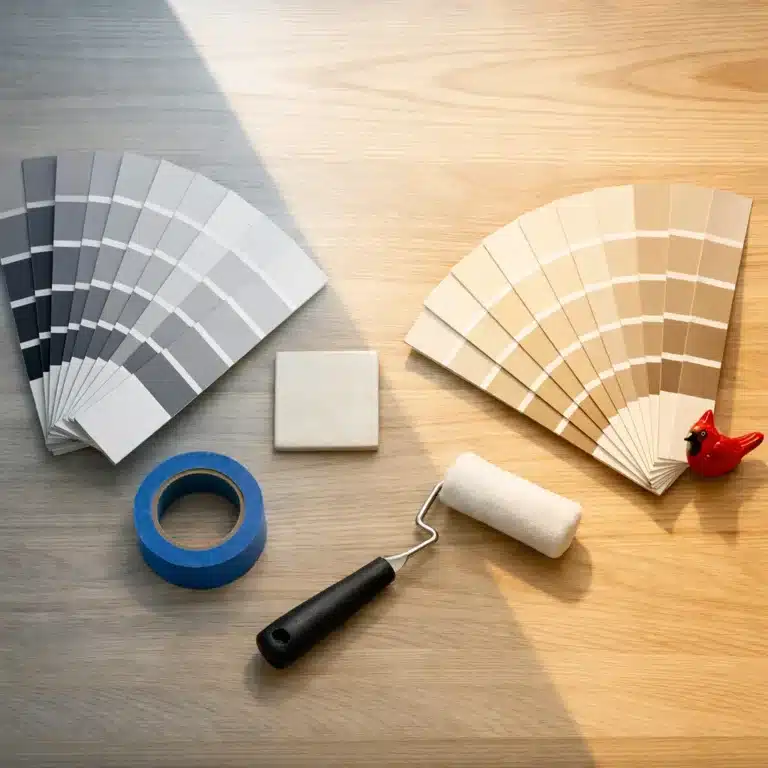
Benjamin Moore recommends movable sample boards so you can compare paint around the room as light changes. Check your samples beside the sofa during daylight and with the lamps you use at night. See its paint sample guidance.
- Gather the sofa, flooring, rug, and trim colors first.
- Choose two or three wall-color candidates.
- Prepare samples using the paint maker’s instructions.
- Move them between the sofa wall, trim, and darker corners.
- Review them at the times you normally use the room.
- Choose the wall color before buying the finishing accessories.
Our room-light paint guide explains the next checks. Once you choose, use the paint calculator to estimate the quantity before shopping.
Reviewed October 27, 2026. Expanded with a room-planning sequence, contrast checks, and practical palette troubleshooting. These are editorial styling examples, not reports of a physical room test. The linked Benjamin Moore sampling guidance was checked for this revision. See our editorial standards.
Common Questions
Can gray walls work with a brown leather sofa?
They can. Compare the actual gray with the leather, floor, and trim. If the room feels colder than you want, sample a warmer putty or mushroom alongside the gray instead of assuming all gray paint must go.
Do I need white walls for a farmhouse living room?
No. Cream, mushroom, and muted blue are alternative starting points. The wood, textiles, and balance of light and dark surfaces matter as much as a style label.
Should the coffee table match the leather?
It does not need to. A different wood tone can keep the sofa and table from reading as one brown block. Compare the finishes in the room and repeat a connecting color elsewhere if needed.