Floor Tile Ideas: Best Types, Patterns & Buying Guide
Quick answer: For most residential floors, start by choosing a tile that the manufacturer rates for the exact location, then compare material, water absorption, wear, slip characteristics, size, layout, maintenance, and installation requirements. Porcelain is a strong all-around choice for many kitchens, entries, and bathrooms, but it is not automatically right for every wet floor or outdoor project. Ceramic, natural stone, terracotta, terrazzo, quarry tile, and mosaics each have different strengths.
| Where You’re Tiling | Good Starting Point | What to Verify |
|---|---|---|
| Kitchen floor | Porcelain or floor-rated ceramic | Floor use, wear rating, cleaning needs, grout, substrate |
| Bathroom floor | Floor-rated porcelain, ceramic, or suitable stone | Wet-area suitability, DCOF/product-use guidance, maintenance |
| Shower floor | Tile specifically approved for shower floors | Manufacturer use designation, drainage layout, waterproofing system, slip considerations |
| Entry or mudroom | Durable porcelain, quarry tile, or appropriate ceramic | Traffic rating, tracked-in grit, water, cleaning |
| Outdoor floor | Exterior-rated tile for your climate | Frost resistance, absorption, substrate, drainage, manufacturer exterior approval |
Before ordering, use the Tile Calculator to estimate tile, boxes, grout, and the material costs you enter. Then compare layout with the Tile Layout Patterns planner and check current installation costs in the 2026 Tile Installation Cost guide.
Porcelain vs. Ceramic Floor Tile
Porcelain and non-porcelain ceramic tile are both ceramic products, but the water-absorption threshold is different. The Tile Council of North America defines porcelain tile as having water absorption of 0.5% or less. Non-porcelain tile absorbs more than 0.5%. See TCNA’s porcelain definition.

Porcelain Floor Tile
Porcelain’s low absorption makes it a useful option for many moisture-prone and high-use areas. TCNA notes that porcelain is usually frost resistant, but not always. For exterior work, check the manufacturer’s frost and exterior-use information rather than relying on the word “porcelain” alone.
Porcelain can also be harder to cut than many non-porcelain ceramic tiles. Large formats and dense products may raise the difficulty of a DIY installation.
Ceramic Floor Tile
Non-porcelain ceramic can be a practical choice for many indoor floors when the product is rated for floor use. Do not assume every ceramic tile belongs on a floor. Wall-only ceramic products and decorative pieces may not be designed for foot traffic.

For a deeper material comparison, see Differences Between Ceramic and Porcelain Tile.
Floor Tile for Wet Areas: Do Not Buy by Texture Alone
Wet-floor safety is more complicated than “matte is safe” or “small tile has more grip.” Tile selection should account for the exact product, intended use, traffic, contaminants, maintenance, wear, and manufacturer guidance.
TCNA’s current resource center points to ANSI A326.3 for dynamic coefficient of friction testing of hard-surface flooring. TCNA also warns that a single DCOF value does not make a product suitable for every application. See TCNA’s DCOF resource.
For a bathroom or shower floor, check the product page or technical sheet for:
- floor-use approval
- shower-floor or wet-area approval where relevant
- DCOF or other product-use classification supplied by the manufacturer
- tile size and how it works with the required slope
- grout-joint recommendations
- cleaning and maintenance instructions
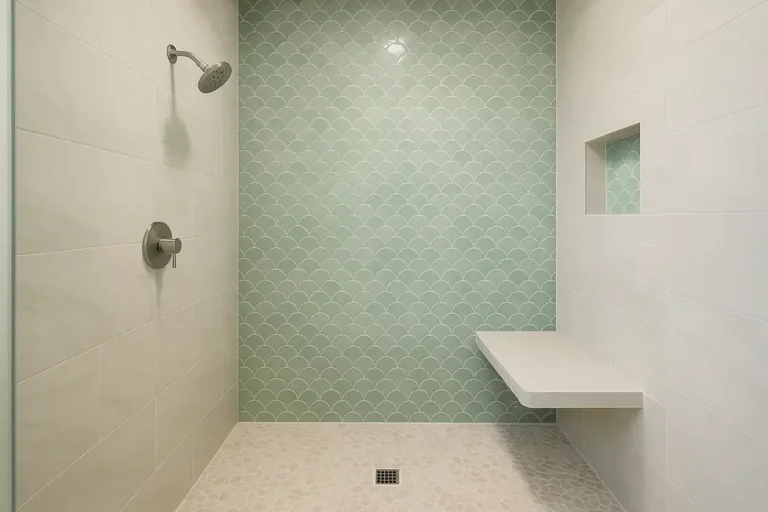
For shower walls and floors, use the Shower Tile Ideas guide and the Shower Tile & Bathroom Finishes edit.
Natural Stone Floor Tile
Marble, limestone, travertine, slate, and other natural stones vary in porosity, mineral composition, finish, and maintenance. One sealing schedule does not fit every stone.
The Natural Stone Institute says some stone benefits from an impregnating sealer while other stone may not need one. It recommends consulting the stone supplier or sealer manufacturer for the stone and the product being used. Sealing can improve stain resistance, but it does not make stone stain proof. See Natural Stone Institute care guidance.
Use pH-neutral or stone-appropriate cleaners where the stone supplier recommends them. Acidic products can etch calcareous stones such as marble and limestone.
See Natural Stone Tile for more material guidance.
Terracotta Floor Tile

Terracotta brings natural color variation and a softer, aged appearance. It can also be porous. Sealing, cleaning, installation, and exterior suitability depend on the product and finish.
Do not use a fixed “seal once a year” rule. Follow the tile maker and sealer manufacturer’s instructions for the exact terracotta product.
Terrazzo, Quarry Tile, and Other Durable Options
Terrazzo
Terrazzo can be manufactured as tile or installed as a poured system. Tile products vary in binder, aggregate, finish, thickness, and maintenance. Confirm floor rating and care instructions for the product you are considering.
Quarry Tile
Quarry tile is a durable unglazed ceramic option often used in utility, commercial, entry, and traditional spaces. Color, absorption, slip characteristics, and sealing recommendations vary by product.
Brick-Look Porcelain
If you want the visual warmth of brick with a tile format, brick-look porcelain can be easier to plan for wet cleaning than actual reclaimed brick. Confirm floor and exterior ratings on the product you buy.
Peel-and-Stick and Luxury Vinyl Are Not Ceramic Floor Tile
Self-adhesive vinyl tile and luxury vinyl tile are resilient flooring products, not ceramic or porcelain tile. They can still be useful in the right project, but they should be compared as a separate flooring category.
For peel-and-stick products, follow the manufacturer’s substrate, moisture, temperature, rolling, and wet-area instructions. Do not assume “water resistant” means suitable for a shower or every bathroom installation.
If you are comparing resilient flooring with real tile, keep longevity, repairability, subfloor preparation, water exposure, comfort, and installation method separate in your decision.
Best Floor Tile Ideas by Room
Kitchen Floor Tile
Kitchens need a floor that can handle regular foot traffic, cleaning, spills, and dropped objects. Porcelain and floor-rated ceramic are common starting points. Natural stone can also work when its maintenance fits the household.
Large-format stone-look porcelain can reduce the number of grout joints. Checkerboard, brick-look, and muted patterned tile can add more visual movement.
Bathroom Floor Tile
Bathroom floors need product-specific wet-area consideration. Choose a floor-rated tile and verify the manufacturer’s use classification. A tile that is approved for a dry bedroom floor is not automatically approved for a wet bathroom floor.
For compact rooms, see Small Bathroom Tile Ideas.
Entry and Mudroom Tile
Entries collect grit, water, mud, and concentrated traffic. Look for a tile rated for the expected use and a finish you can maintain easily. A mid-tone or variegated surface may show tracked-in debris less than an extremely dark polished floor.
Laundry Room Tile
Laundry floors benefit from easy cleaning and moisture-tolerant materials. Check appliance-clearance, movement, subfloor, and installation requirements before choosing a thick tile or raising floor height.
Outdoor Tile
Exterior installations need tile and installation materials approved for the climate and exposure. TCNA notes that porcelain is usually frost resistant because of low absorption, but not always. Check the manufacturer’s literature for frost resistance and outdoor use.
Floor Tile Patterns That Change the Room

Straight Stack
Simple alignment keeps attention on the tile color, veining, or texture. It works particularly well with large formats.
Running Bond
Offset rows create movement. For long rectangular tile, follow the manufacturer’s offset guidance because warpage and lippage considerations can affect the recommended pattern.
Checkerboard
Checkerboard can range from high-contrast black and white to quieter combinations such as cream and taupe, sage and ivory, or two stone-look tones.
Herringbone
Herringbone adds direction and movement. It also increases layout and cutting complexity, so dry-lay the starting area before committing.
Hexagon and Mosaic
Smaller shapes can make curves, slopes, and transitions easier to follow, but floor suitability still depends on the product. Do not infer wet-area safety from tile size alone.
Use the Tile Layout Patterns planner to compare patterns before ordering.
Large-Format Floor Tile: What to Check
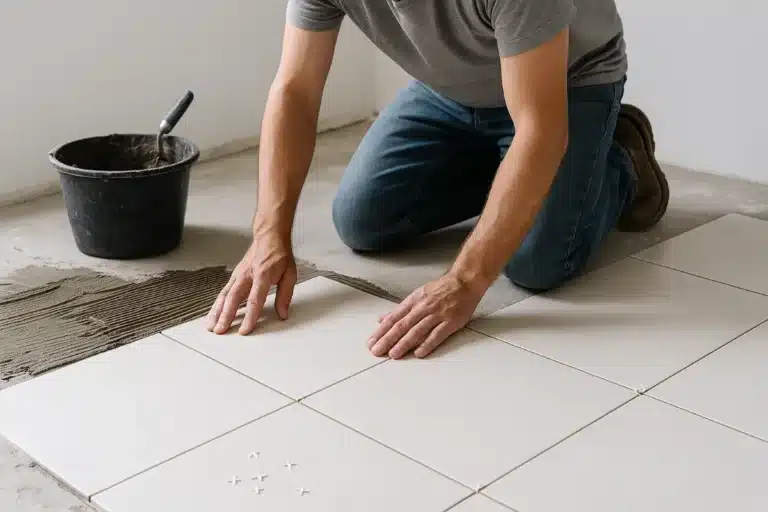
Large-format tile can create a quieter visual field with fewer grout joints, but it places more demand on substrate preparation, handling, layout, mortar coverage, and lippage control.
The 2026 TCNA Handbook includes guidance on substrate flatness, grout joints, patterns, wet areas, and installation methods. For a large-format project, product and installation requirements matter more than the look of the sample alone. See the 2026 TCNA Handbook overview.
How Much Floor Tile Should You Buy?
Do not use one waste percentage for every tile job. Required overage depends on room shape, tile size, pattern, cuts, breakage risk, matching, and whether you want spare tile for future repairs.
Start with measured floor area and the box coverage from the exact product. Then account for the layout and cuts in your plan.
- Calculate tile, boxes, grout, and material cost
- Plan the layout before ordering
- Compare floor-tile directions and project tools
Floor Tile Cost: Material Price Is Only One Part
The tile price per square foot is not the full project price. Budget for the substrate, preparation, membrane or underlayment where required, mortar, grout, trim, transitions, delivery, tools, demolition, disposal, and labor.
For current planning ranges and the factors that move labor cost, see Tile Installation Cost in 2026.
If you are deciding whether the project is realistic as a DIY job, see DIY or Hire a Tile Installer?.
Floor Tile Buying Checklist
- Is the tile approved for floors?
- Is it approved for the room and expected moisture exposure?
- What water-absorption information does the manufacturer provide?
- What DCOF or product-use information applies to the intended location?
- Is it rated for exterior or freeze-thaw exposure if needed?
- What grout-joint size and pattern does the manufacturer recommend?
- What substrate and setting materials are required?
- Does the tile need sealing or a grout-release treatment?
- What cleaning products are recommended?
- How will exposed edges and transitions be finished?
- How many boxes are needed after layout and cuts are considered?
- Can you keep spare tile from the same lot for future repairs?
Floor Tile FAQs
Is porcelain always better than ceramic for floors?
No. Porcelain has lower water absorption, but a floor-rated non-porcelain ceramic tile can be a good choice for many indoor rooms. Compare intended use, wear, installation, maintenance, and the exact product.
Is porcelain waterproof?
Porcelain tile has water absorption of 0.5% or less by definition, but a tiled floor or shower is a complete assembly. Grout joints, penetrations, substrate, membranes, drainage, and installation details still matter.
What is the safest tile for a wet bathroom floor?
There is no single material that is safest in every wet application. Check the product’s floor and wet-area suitability, DCOF or other use classification, expected contaminants, maintenance, and manufacturer recommendations.
Does a DCOF of 0.42 make a tile safe everywhere?
No. TCNA warns that one DCOF value is not enough to approve a tile for every application. Traffic, contaminants, maintenance, wear, and product guidance also matter.
Does natural stone need to be sealed every year?
No universal schedule applies. The Natural Stone Institute says some stones benefit from an impregnating sealer while others may not need one. Follow the stone supplier and sealer manufacturer’s guidance.
Can I use wall tile on a floor?
Only if the manufacturer also rates that product for the intended floor use. A wall-only product should not be assumed suitable for foot traffic.
Is peel-and-stick tile the same as ceramic tile?
No. Most peel-and-stick flooring is a resilient product such as vinyl. Compare it separately from ceramic, porcelain, and stone.
What floor tile pattern wastes the most material?
There is no universal ranking. Room shape, tile dimensions, pattern, starting point, border treatment, and cuts determine waste. Plan the layout first, then calculate boxes.