Natural Stone Tile: Marble, Travertine, Slate & Buying Guide
Quick answer: Natural stone tile can work beautifully on floors, walls, backsplashes, fireplaces, bathrooms, and some wet areas, but the right stone depends on mineral composition, finish, porosity, traffic, moisture exposure, cleaning needs, and the installation system. Marble, limestone, travertine, slate, and granite do not all behave the same way.
| Stone | Good Starting Uses | Main Watchouts |
|---|---|---|
| Marble | Foyers, walls, bathroom surfaces, selected floors | Acid sensitivity, finish selection, scratching/etching, wet-area suitability |
| Travertine | Floors, walls, bathrooms, patios where product is approved | Porosity, voids/fill, maintenance, finish |
| Limestone | Interior floors, walls, fireplaces | Acid sensitivity, porosity, wear |
| Slate | Floors, entries, some exterior uses | Cleaving, surface variation, product-specific exterior rating |
| Granite | Floors, entries, some wet/exterior uses | Finish, slip characteristics, stone-specific absorption and maintenance |
Use the Tile Calculator to estimate tile, boxes, grout, and material cost inputs. Then compare layout and installation requirements before ordering.

Natural Stone Tile Is Not One Material
The Natural Stone Institute groups stone by geology and mineral composition because those differences affect care and performance. Calcareous stones such as marble, limestone, and travertine contain calcium carbonate and are sensitive to acids. Siliceous stones such as many granites and slates generally tolerate acid better, though the Institute still advises against casual acid cleaning because trace minerals and surface treatments can react. See Natural Stone Institute care guidance.
That is why “natural stone” should never be treated as one maintenance category.
Marble Tile
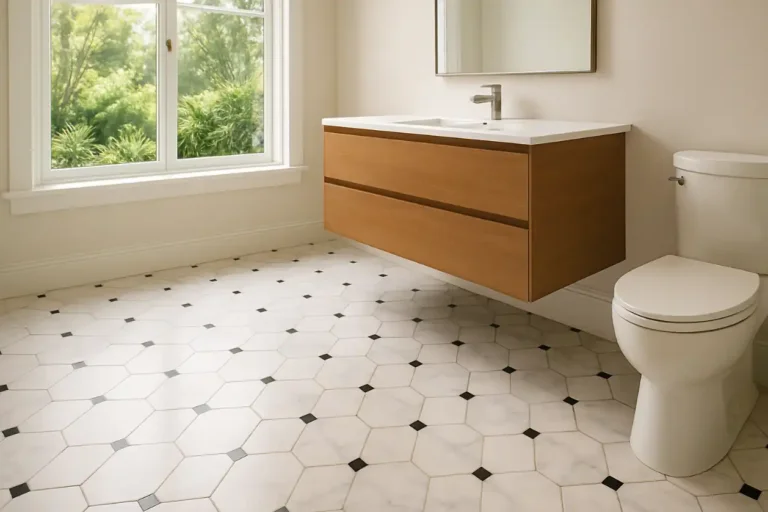
Marble is a metamorphic stone built largely from calcite. It can be used on floors, walls, vanity areas, fireplaces, and selected wet-area installations when the exact stone, finish, and installation method are appropriate.
The Natural Stone Institute notes that many marbles are suitable for wet areas, including tub decks and showers. That does not mean every marble, finish, or format belongs on every shower floor. See the Natural Stone Institute marble guidance.
What to expect from marble
- natural veining and color variation
- acid sensitivity
- possible etching from acidic cleaners and spills
- finish-dependent slip and maintenance characteristics
- stone-specific sealing decisions
Do not use vinegar, lemon-based cleaners, or other acidic products on marble unless the stone supplier specifically approves them.
Travertine Tile
Travertine is a calcareous stone with visible pores and voids that may be factory-filled or left more open depending on the product.
Travertine can work on floors, walls, bathrooms, and selected exterior applications, but the fill, finish, porosity, climate, and installation system all matter.
A honed travertine wall and a tumbled outdoor paver are not interchangeable products. Buy for the application, not just the stone name.
Limestone Tile
Limestone can create a quiet, low-contrast floor or wall with softer natural movement than many marbles. Like marble and travertine, it is calcareous and sensitive to acids.
Check:
- stone density and finish
- floor or wall approval
- wet-area suitability
- recommended cleaners
- sealer guidance from the supplier
Slate Tile
Slate is often chosen for its layered texture and variation. Some slate products are dense and durable; others can cleave or shed more readily.
Do not assume natural texture automatically makes slate safe for every wet floor. Wet-area selection still depends on the exact product, finish, installation, and maintenance conditions.
For exterior use, confirm freeze-thaw and exterior suitability with the stone supplier.
Granite Tile
Granite is generally harder and less acid-sensitive than calcareous stone, but performance still varies by stone and finish.
The Natural Stone Institute notes that many granite countertops do not need sealing and that sealing is not a universal requirement even within one stone family. That same lesson applies broadly: test and follow stone-specific guidance rather than assuming every natural stone surface needs the same treatment. See Natural Stone Institute sealing guidance.
Does Natural Stone Tile Need to Be Sealed?
Sometimes. Not always.
The Natural Stone Institute says sealing is a common precaution for some stones, but many stones do not require sealing. Impregnating sealers make stone more stain resistant, not stain proof. The Institute recommends consulting the stone supplier and sealer manufacturer for the correct product and reapplication interval. See current stone-care guidance.
That means you should not follow a blanket rule such as:
- seal every natural stone immediately
- reseal every year
- reseal every 1 to 3 years
The right decision depends on the stone, finish, location, sealer chemistry, exposure, and manufacturer instructions.
Natural Stone in Bathrooms and Showers

Natural stone can work in wet areas, but wet exposure places additional demands on stone selection and installation.
The Natural Stone Institute has dedicated wet-area training because stone properties, mesh reinforcement, installation methods, moisture exposure, and soundness all affect performance. See the Natural Stone Institute wet-area course overview.
Before choosing stone for a shower
- confirm that the exact stone is recommended for the wet-area application
- confirm the finish and tile size suit the floor or wall location
- plan the waterproofing system separately from the visible stone
- check compatible setting materials and grout
- review sealer and cleaning guidance
- confirm slope, drainage, and movement-joint requirements
Do not assume that small mosaics or rough texture automatically make a shower floor safe. Product use, wet conditions, contaminants, maintenance, and the complete assembly still matter.
See the Shower Tile Ideas guide and the Shower Tile & Bathroom Finishes edit for broader wet-area planning.
Natural Stone Floors
Stone floors need more than a square-footage calculation. Check:
- stone thickness and format
- substrate strength and flatness
- setting-material compatibility
- floor-use approval
- finish and slip characteristics
- movement joints
- transition height
- maintenance expectations
Use the Floor Tile Buying Guide for room-by-room floor planning and the Tile Layout Patterns planner before ordering.
Outdoor Natural Stone Tile
Outdoor stone must be selected for the climate and exposure.
Freeze-thaw cycling, drainage, deicing salts, surface finish, thickness, installation method, and stone absorption can all affect performance. Do not assume slate, granite, travertine, or another stone is automatically approved outdoors.
Ask the stone supplier for exterior-use and freeze-thaw guidance for the exact product.
How to Clean Natural Stone Tile
The Natural Stone Institute recommends learning the mineral composition of the stone first. Calcareous stones are acid-sensitive, so lemon, vinegar, and many acidic bathroom cleaners can dull or etch them. Abrasive cleaners can scratch certain finishes. See the Institute’s cleaning guidance.
General care approach
- remove grit before it scratches the surface
- blot spills rather than spreading them
- use a stone-compatible cleaner
- avoid acid on marble, limestone, and travertine
- follow the sealer manufacturer if an impregnator is used
- test unfamiliar cleaners in a hidden area
There is no need for a universal “monthly wash” schedule. Clean based on use, soil, stone type, and product directions.
Polished vs. Honed vs. Textured Stone
Polished
Polishing increases reflectivity and can intensify color and veining. It can also make etching more visible on acid-sensitive stones.
Honed
Honed finishes are less reflective and can create a softer appearance. They are not automatically slip-resistant or maintenance-free.
Tumbled, Brushed, or Textured
These finishes can produce a more aged or tactile appearance. Texture can also hold soil differently, so maintenance may change.
Choose the finish for the location and cleaning tolerance, not just the showroom appearance.
Natural Stone vs. Porcelain Stone-Look Tile

Natural stone offers real mineral variation. Porcelain can imitate marble, limestone, slate, or travertine with more uniform technical properties.
Choose natural stone when you value:
- real mineral variation
- unique veining and color movement
- a surface that can age and patina naturally
Choose stone-look porcelain when you value:
- lower water absorption
- more predictable sizing and technical data
- less sensitivity to acid than calcareous stone
- simpler maintenance for many households
For a broader comparison, see Types of Tile.
Natural Stone Tile Buying Checklist
- What stone is it exactly?
- Is it calcareous or siliceous?
- Is the finish polished, honed, tumbled, brushed, or textured?
- Is it approved for the floor, wall, shower, or exterior location?
- Does the stone supplier recommend sealing?
- If sealed, which impregnator is compatible?
- What cleaning products are approved?
- Does the project need special grout or setting material?
- What substrate and waterproofing method are required?
- How much natural color/vein variation should you expect?
- Should tiles be blended from several boxes before installation?
- Do you need spare stone from the same batch for later repairs?
Plan Quantity and Cost Before Ordering
- Use the Tile Calculator
- Avoid Tile Measuring Mistakes
- Plan the Tile Layout
- Check Tile Installation Cost
- Browse the Floor Tile Buying & Styling Edit
Natural Stone Tile FAQs
Does every natural stone tile need sealing?
No. The Natural Stone Institute says many stones do not require sealing, while others benefit from an impregnating sealer. Follow the stone supplier and sealer manufacturer for the exact stone and finish.
How often should natural stone be resealed?
There is no universal schedule. Use the sealer manufacturer’s reapplication guidance and the stone supplier’s recommendation.
Can marble be used in a shower?
Many marbles can be used in wet areas, but the exact stone, finish, format, installation method, waterproofing system, maintenance plan, and supplier guidance must support the application.
Can I use vinegar on natural stone?
Do not use vinegar on calcareous stones such as marble, limestone, or travertine. The Natural Stone Institute warns that acids can dull or etch these stones.
Is honed stone automatically less slippery?
No. Finish is only one factor. Wet use, contaminants, maintenance, tile size, surface characteristics, and product-specific guidance also matter.
Is natural stone better than porcelain?
Neither is universally better. Natural stone offers real mineral variation; porcelain offers more predictable technical properties and lower water absorption. Choose based on the room, maintenance tolerance, installation, and desired appearance.