Small Bathroom Tile Ideas: Best Floor, Wall & Shower Tile
Quick answer: For a small bathroom, choose tile by surface first, not by room size alone. Our tile resources help you compare materials, layouts and quantities before you buy. Large-format floor or wall tile can reduce visual breaks, while mosaics and smaller formats can work well where a shower floor needs to follow slope. For any bathroom floor, check that the manufacturer classifies the tile for the expected wet use. Light tile and matching grout can make the field feel calmer, while vertical layouts can emphasize height.
The fastest way to narrow your choices is to separate the project into floor tile, wall tile, and shower-floor tile. Each surface has different demands for traffic, water exposure, slope, cleaning, and installation. Use the guide below before choosing color or pattern. For budgeting, see our bathroom tile installation cost guide for floor, shower, labor, preparation, and removal costs.
Best Tile for a Small Bathroom by Surface
Bathroom floor
Choose ceramic, porcelain, stone, or another hard-surface product the manufacturer rates for floor use. In a bathroom, confirm the declared wet-use classification, surface texture, maintenance needs, and grout requirements.
Bathroom walls
Wall tile gives you more freedom with glossy finishes, larger formats, stacked layouts, color, and decorative shapes because walking slip resistance is not the issue.
Shower floor
Choose a product specifically approved for the shower-floor application. Smaller tiles and mosaics can conform to slope well, but tile size or grout-line count alone does not guarantee slip safety.
Planning tip: Keep one dominant tile, one supporting tile, and one accent at most. Repeating color or grout across surfaces helps a small room feel intentional instead of crowded.
Useful Tools for a Small Bathroom Tile Project
Tile spacers · Tile leveling systems · Grout floats
Affiliate disclosure: As an Amazon Associate, I earn from qualifying purchases. Choose setting materials, waterproofing, grout, and sealers based on the tile and installation system, not on a generic tool list.
Key Takeaways: Small Bathroom Tile Ideas at a Glance
| What Works Well? | Why It’s Smart |
|---|---|
| Large format bathroom tile flooring | Fewer grout lines, less cluttered look |
| Light colors | Reflect more light, space feels bigger |
| Vertical tile patterns | Draw the eye up, ceiling looks taller |
| Mosaic or small tiles for shower floors | Can follow shower-floor slope; confirm manufacturer approval for the application |
| Contrasting grout (carefully) | Highlights patterns, adds depth |
| Peel and stick bathroom tile | A cosmetic option only where the product is approved for the surface and moisture exposure |
| Bathroom tile paint | Use only a coating approved for the exact surface, traffic and wet exposure |
| Use my tile calculator | Estimate tile quantity and waste, then check grout coverage against the chosen product, tile size, joint width, and joint depth. |

Plan your next tile project with our Tile Resources: material comparisons, layout guides and installation planning.
Use the Tile Calculator to estimate tile quantity, boxes, grout and the material costs you enter. Add labor, preparation, delivery and other project charges separately.
Can Large Tiles Work in Small Bathrooms?
This one’s a hot topic. Most folks assume big tiles = big room, small tiles = small room. But big tiles, like 12×24 or even bigger, can stretch out a tight space because they create fewer visual breaks. Fewer grout lines mean your eye sweeps across the room without bouncing around.
For a less broken-up floor, compare larger porcelain or ceramic tiles with a smaller format. Dry-plan the layout first: the size of the cuts at the doorway and fixtures matters as much as the size of the full tiles.
Tips:
- Stick to light neutrals for large tiles: whites, soft grays, gentle beige.
- Pick a grout color that blends to keep that seamless vibe.
- Go vertical with wall tiles to push the ceiling higher.

Small Tiles: The Hero for Showers
For a shower floor, mosaics and smaller formats are often practical because they can follow the floor slope and drain geometry. Hexagons, penny rounds, and mosaic sheets are common choices. Do not assume that more grout lines automatically make a surface safe. TCNA notes that wet-floor suitability depends on the tile’s declared use classification, surface, contaminants, drainage, maintenance, and manufacturer guidance.
Got a vintage vibe? Penny tiles bring that old-school charm. A hexagon mosaic can add a modern twist without overpowering the space.

Subway Tile: Your Best Friend
When I think of timeless bathroom tile designs, subway tile comes to mind every single time. It’s classic, cheap, and flexible. You can run them horizontally for a traditional look or flip them vertically to lift the space.
Ways I’ve seen subway tile used:
- White on white: Keeps it bright and open.
- Bold grout lines: Try black or charcoal for contrast.
- Stacked or herringbone: Mix up the pattern for something different.

Using Color Without Cramping It
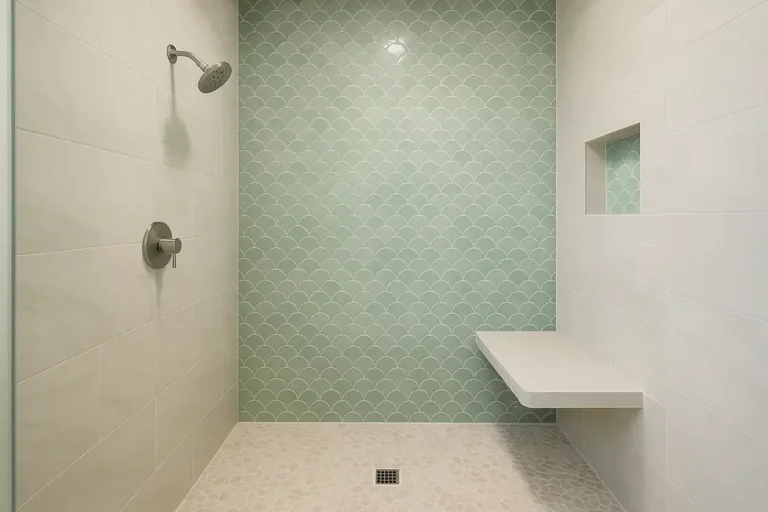
Light neutrals are one direction for small bathroom tile ideas, but color deserves a place on the sample board too. Try green bathroom tile in soft sage or dusty olive beside your vanity and fixtures. Whether the room feels calm or busy depends on the contrast, pattern and lighting as well as the tile color.
Pro move: Use the color as an accent wall or niche. Keep the rest neutral.

Can You Really Paint Bathroom Tile?
Bathroom tile paint can be a cosmetic option on some existing tile, but the coating has to be approved for the surface and exposure. TCNA’s ANSI A326.3 guidance says hard-surface flooring that receives a coating after installation should be used only where it can be kept dry unless the coating manufacturer declares it suitable for wet use. For a bathroom floor, follow the coating manufacturer’s preparation, cure-time, traffic, and wet-use instructions rather than treating paint as a universal tile fix.

Peel and Stick Bathroom Tile: DIY’s Secret Weapon
Peel and stick bathroom tile can be useful for a dry backsplash or decorative wall when the product is approved for that location. Do not assume a peel-and-stick product is a shower waterproofing system or suitable for a wet floor. Check the manufacturer’s moisture, temperature, substrate, and wet-area restrictions before installing it in a bathroom.
Where peel-and-stick shines:
- Accent walls
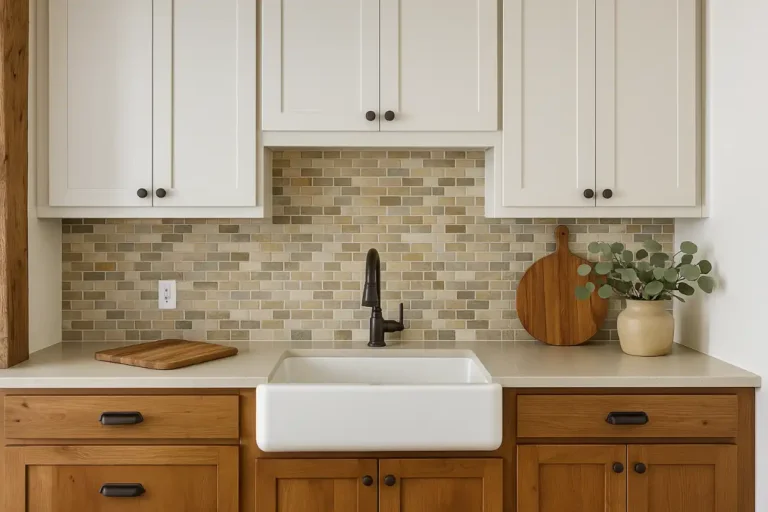
- Backsplashes
- Temporary rentals

Playing With Patterns: Tricks for Small Spaces
Patterns do more than look pretty. They change how your brain reads the room. My go-tos:
Vertical stripes: Make ceilings feel taller.
Diagonal layouts: Add depth.
Herringbone: Creates a directional pattern; plan the perimeter cuts before committing.
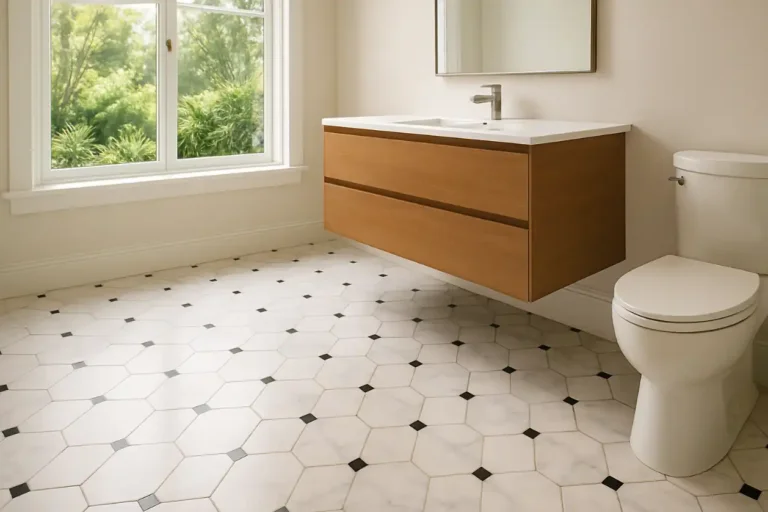
Checkerboard: A black and white bathroom tile combo is timeless and makes small bathrooms feel punchy and stylish.

Mixing Tile Sizes and Styles: Smart, Not Scattered
One mistake I see: folks throwing every pretty tile together. Don’t do it. The trick is to balance:
- Use large tiles for the floor or main walls.
- Small tiles for shower floors or niches.
- A standout accent tile sparingly.
Hexagons, subway tile, penny rounds and mosaics can compete when every surface asks for attention. Start with one dominant pattern and use a shared color family to connect the supporting surfaces.

Small Bathroom Tile and Grout Combinations
The same white tile can look quiet, softly outlined or strongly geometric just by changing the grout. Start with the amount of pattern you want to see, then compare physical samples. These color directions are design suggestions, not product matches or approvals for a wet area.
| Tile | Grout direction | Visual effect | Before you choose |
|---|---|---|---|
| Warm white tile | Ivory grout | A quiet wall with gently visible edges. | Compare with white fixtures so the tile does not look unintentionally yellow. |
| White subway tile | Light gray grout | A defined grid without the strongest contrast. | Test a sample board with the actual joint width. |
| White subway tile | Charcoal grout | A bold outline that makes the layout a feature. | Check cut edges and alignment; dark joints draw attention to them. |
| Cream or beige tile | Warm beige grout | A soft, closely matched field. | Compare dry grout with the tile in daylight and under bathroom lighting. |
| Sage wall tile | Muted warm gray grout | A restrained outline around the color. | Keep the floor quieter if the wall pattern is the focal point. |
| Marble-look porcelain | Soft gray grout | A joint color that can relate to the printed veining. | Compare several tiles so one vein does not determine the entire choice. |
Same White Tile, Three Grout Colors
Ivory grout
Light gray grout
Charcoal grout
Illustrative color diagrams, not product swatches. Tile size, joint width, lighting and your screen affect the appearance. The tile layout is identical in all three examples.
Ivory keeps the joints subtle. Light gray makes the grid easier to see. Charcoal gives every tile a strong outline. For a patterned floor, try the quieter wall option first; for plain flooring, a more visible wall grid can become the room’s main detail. Compare layouts in our tile pattern guide.
Choose Grout for the Surface, Not Just the Color
A decorative wall tile is not automatically suitable for a bathroom floor or shower floor. Check the exact tile’s manufacturer instructions for its intended location. For shower floors, confirm the tile, drainage design and installation system together. The Tile Council of North America’s slip-resistance guidance explains why a friction number alone cannot establish suitability.
Sealing depends on the grout product. For example, CUSTOM states that Fusion Pro does not require sealing. Follow the selected grout’s instructions for compatible tile, joint width, application, curing, cleaning and wet-area use. Grout color does not determine these requirements.
Make a Sample Board Before Ordering
- Use the actual tile and two or three grout candidates with the planned joint width.
- Let the grout cure as directed before comparing its finished color.
- View the board upright for walls or flat for floors, in daylight and with the bathroom lights on.
- Place it beside the vanity, countertop and flooring samples. Pick the combination that makes the whole room work.
Once the tile and layout are chosen, use the tile calculator to plan quantities and waste. Calculate grout from the chosen manufacturer’s coverage guidance using tile dimensions, joint width and joint depth.

Waterproofing: Non-Negotiable
Plan the shower’s waterproofing system before choosing the decorative finish. Follow the system manufacturer’s instructions for the substrate, seams, corners, penetrations and drain connection. Decorative tile, grout and peel-and-stick coverings do not replace the required waterproofing assembly. If the existing assembly is uncertain, have a qualified installer assess it before covering it.

Small Bathroom Tile Styles to Compare
Use these four style directions to narrow your sample order. Compare each with the room’s permanent finishes and the care instructions for the actual tile.
- Textured ceramic: Adds depth without big patterns.
- Terrazzo: Fun, speckled, looks cool in a tiny powder room.
- Stone-look porcelain: Durable, elegant, easy to clean.
- Black and white bathroom tile combos: Always classic.

Real Budget Tips: Save Where It Counts
Small bathrooms can chew up budget fast. Here’s how I keep it smart:
- Splurge on a wow factor: one accent wall, a dramatic niche, or bold floor.
- Keep the rest simple with affordable Home Depot bathroom tile basics.
- Use leftover tile scraps to trim mirrors or shelves.

Maintenance: Don’t Forget the Mop
Ask for the tile and grout care instructions before ordering. Cleaning needs depend on surface texture, grout formulation, water deposits and use. Test samples with your normal lighting; neither a matte finish nor gray grout guarantees that marks will be hidden.

Small Bathroom Tile Questions
Is large tile or small tile better for a small bathroom?
Large tile reduces the number of visible joints on walls and floors. Smaller formats may work better around a shower drain and changes in slope. Choose by surface and manufacturer approval, then decide which scale you like.
What grout color works with white bathroom tile?
Ivory gives a softer outline, light gray adds definition, and charcoal makes the pattern prominent. Compare a cured sample board with your fixtures and lighting before choosing.
Does every bathroom grout need sealing?
No. Sealing requirements depend on the grout formulation and manufacturer instructions. Check the exact product rather than assuming every cement, epoxy or ready-to-use grout needs the same treatment.
Can I paint bathroom tile?
Only use a coating approved for the exact surface and exposure. A product intended for dry walls may be unsuitable for a wet bathroom floor or shower. Follow its preparation, cure-time and maintenance instructions.
Is peel-and-stick tile suitable for bathrooms?
Some products are intended for dry decorative walls or backsplashes. Check the manufacturer’s substrate and moisture restrictions. Do not treat decorative adhesive tile as a substitute for a shower waterproofing system.
Should I choose matching or contrasting grout?
Choose matching grout when you want the tile field to read more quietly. Choose contrasting grout when the layout is a feature you want to emphasize. Color contrast alone does not determine cleaning needs.
Plan Your Small Bathroom Tile Project
Choose the right tile for each surface, test the grout color, and map the layout before ordering. Use the tile calculator for quantities, then compare the small-bathroom tile and brass edit for finishing ideas.