
Kitchen Cabinet Painting Cost in 2026: Pro vs DIY
Quick answer: Current 2026 cabinet-painting cost databases disagree sharply. Angi and HomeAdvisor report professional kitchen cabinet painting around $425 to $1,466, with an average near $942, while Fixr reports a much higher national range of $2,500 to $6,500, averaging about $4,000. That spread is too large to treat any single number as “the price.” Scope, cabinet count, prep, door style, finish quality, labor market, and whether the work is done on-site or in a spray shop can move a quote dramatically.
The practical move is to compare your own cabinet count and condition against several local quotes, then make sure every quote includes the same prep and finish steps.
| 2026 Cost Reference | Published Range | What It Tells You |
|---|---|---|
| Angi / HomeAdvisor | $425–$1,466; average about $942 | Large national project database; lower reported range |
| Fixr | $2,500–$6,500; average about $4,000 | Higher contractor/expert pricing model |
| Angi per door | About $100–$250 per door | Useful when comparing kitchens by cabinet count |
| Angi/HomeAdvisor linear foot | About $30–$60 per linear foot | Another common quote method |
Sources: Angi 2026 cabinet painting cost data, HomeAdvisor 2026 cabinet painting data, and Fixr 2026 cabinet painting data.
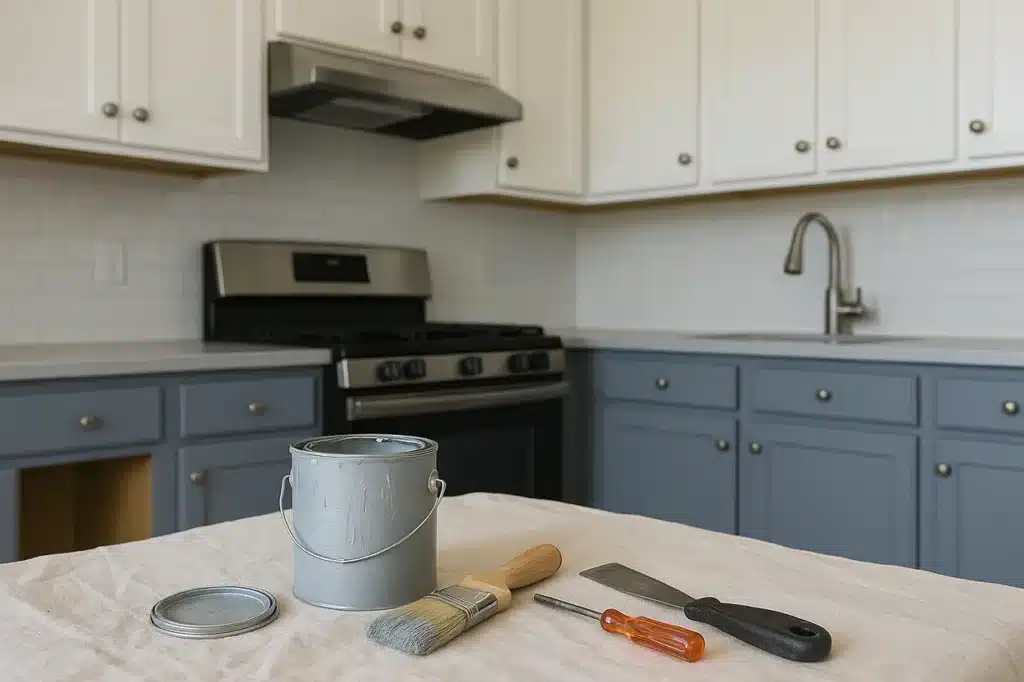
Why Kitchen Cabinet Painting Quotes Vary So Much
Cabinet painting is closer to finish work than ordinary wall painting. The labor is concentrated in doors, drawers, frames, cleaning, sanding, masking, priming, drying, flipping, recoating, and reassembly.
These are the biggest cost drivers.
1. Number of Doors and Drawer Fronts
A kitchen with 12 simple slab doors is not the same project as one with 30 doors, 10 drawer fronts, an island, glass inserts, crown molding, and decorative end panels.
Angi reports that many painters price by door or by linear foot, which is often more useful than pricing by the kitchen’s floor area. See Angi’s current pricing factors.
2. Door Style
Slab and simple Shaker doors generally require less detail work than raised-panel, beadboard, routed, or highly decorative doors.
More edges and recesses mean more prep and application time.
3. Existing Finish and Condition
Grease, failing clear coat, peeling paint, damaged veneer, cracked wood, loose joints, and peeling thermofoil can all change the project.
HomeAdvisor currently lists cabinet repair as a separate cost factor and notes that damaged laminate may need repair or replacement before painting. See HomeAdvisor’s 2026 cost factors.
4. Prep Required
Good prep may include degreasing, cleaning, scuff sanding or other surface preparation, repairs, dust removal, masking, and a compatible primer.
Do not accept a quote that simply says “paint cabinets” without explaining how the surface will be prepared.
5. Application Method
Brush-and-roll and spray-applied systems can both work when used correctly. Spray finishing may create a smoother appearance, but it adds masking, equipment, ventilation, booth or containment, and setup considerations.
The application method should fit the coating system and the contractor’s process. A spray quote is not automatically better just because it costs more.
6. Color Change
Going from dark stain to a pale finish can require more blocking, priming, and coating work than refreshing a similar existing color.
Deep colors and very bright whites may also need different prep or coat strategies depending on the product.
7. Local Labor Market
National cost databases are only reference points. Labor rates, contractor overhead, insurance, shop space, travel, demand, and local living costs vary widely.
How Pros Price Cabinet Painting
There is no single standard quoting method.
Per Door and Drawer
Angi’s September 2026 guide reports roughly $100 to $250 per door for many projects, with door style and complexity affecting the price. Some contractors price drawer fronts separately.
Per Linear Foot
Angi and HomeAdvisor cite about $30 to $60 per linear foot as another common method. This can be useful for a simple run of cabinets, but it may hide the extra labor in decorative doors and complex layouts.
Whole-Project Quote
A fixed project quote can be easiest to compare if every contractor is pricing the same scope.
Ask for the quote to state:
- number of doors and drawer fronts
- whether boxes/frames are included
- cleaning and prep process
- repairs included or excluded
- primer system
- finish coating system
- number of coats or finish standard
- spray vs brush/roll method
- door removal and reinstallation
- hardware removal/reinstallation
- masking and containment
- cleanup
- touch-up policy
- estimated schedule
Use the Contractor Estimate Comparison Worksheet to compare quotes line by line instead of choosing the cheapest total.
Painting vs. Refinishing vs. Refacing
These terms are often mixed together, but they are different projects.
| Project | What Changes | 2026 Cost Context |
|---|---|---|
| Painting | Existing doors, drawer fronts, and boxes are coated | Angi/HomeAdvisor: $425–$1,466 typical range; Fixr: $2,500–$6,500 |
| Refinishing | Existing finish is stripped/sanded or renewed with stain, varnish, paint, or another finish | HomeAdvisor: roughly $1,992–$4,495 for professional refinishing |
| Refacing | Doors and drawer fronts are replaced and exposed box faces get new veneer/material | HomeAdvisor: roughly $4,234–$10,226 |
| Replacement | Cabinet boxes and usually doors/drawers are replaced | Varies much more by stock, semi-custom, and custom cabinetry |
Refinishing cost source: HomeAdvisor 2026 refinishing data. Refacing source: HomeAdvisor 2026 refacing data.
When Painting Makes Sense
Painting is usually worth considering when:
- the cabinet boxes are structurally sound
- you like the current layout
- doors and drawer fronts are repairable
- the surface can accept the selected coating system
- you want a color change rather than a new door style
- you want less disruption than full replacement
When Painting May Be the Wrong Project
Consider repair, refacing, or replacement when:
- boxes are swollen or structurally damaged
- thermofoil is extensively peeling
- veneer is failing
- you need a different layout
- you need substantially more storage
- doors are badly damaged or you want a new door style
- the substrate is not compatible with the planned coating system
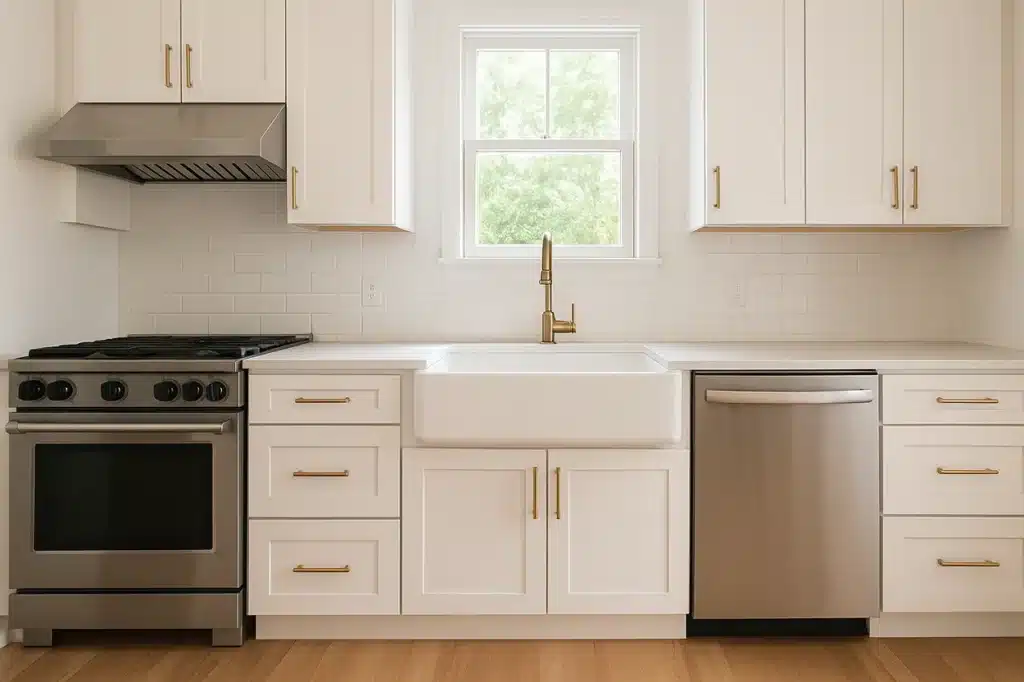
DIY Cabinet Painting Cost: Build a Shopping List, Not a Fake Average
A DIY total depends on what you already own, the coating system, cabinet count, repair needs, and whether you buy or rent spray equipment.
Instead of using a fixed $200–$600 claim, price the actual list:
- cleaner/degreaser approved for the substrate
- scrapers or repair tools if needed
- sanding or surface-prep supplies
- dust control and cleanup supplies
- compatible primer
- cabinet/trim coating
- brushes and mini rollers if used
- masking paper/plastic and tape
- drop cloths/floor protection
- door labeling and drying setup
- sprayer rental or purchase if the coating system calls for it
- appropriate PPE for sanding, spraying, and the coating
For stable tool categories, see Best Tools for Painting Walls. Cabinet work may require different applicators, but the prep and protection principles overlap.
Useful DIY supply categories
- Cabinet sanding and prep supplies
- Masking paper and protection tools
- Cabinet-door drying racks and supports
- Mini rollers for cabinet finishes
Affiliate disclosure: As an Amazon Associate, Cardinal Decor earns from qualifying purchases. Check the coating and equipment instructions before choosing supplies or PPE.
Cabinet Paint and Primer: Follow the System
Do not choose cabinet paint from price per gallon alone.
The coating needs to be appropriate for the cabinet material, existing finish, cleaning exposure, blocking resistance, and application method.
Some cabinet/trim products are waterborne acrylics, urethane-modified acrylics, or waterborne alkyds. Product instructions may call for specific primers on stained wood, slick factory finishes, bare wood, or repaired surfaces.
Read the technical data sheet for the exact coating. Test adhesion on a small inconspicuous area when the existing finish is uncertain.
For general finish differences, see Paint Types & Finishes.
How Long Does Cabinet Painting Take?
HomeAdvisor says many professional cabinet-painting jobs take about two to five days, depending on kitchen size, condition, and complexity. See HomeAdvisor’s cabinet-painter guidance.
That does not mean the coating is fully cured when the doors go back on. Dry time, recoat time, handling time, and full cure vary by product. Follow the coating manufacturer before heavy cleaning or hard use.
Cabinet Painting Quote Checklist
Before signing a contract, ask:
- What exact prep is included?
- Are doors and drawers removed?
- Are cabinet interiors excluded or included?
- How are grease and contaminants removed?
- What primer and finish product will be used?
- How many finish coats are included?
- Are doors sprayed off-site or on-site?
- How is the kitchen contained?
- Are repairs included?
- Are hinges and hardware removed/reinstalled?
- What happens if adhesion fails?
- What touch-up or workmanship warranty is offered?
- When can doors be handled and cleaned normally?
Cabinet Painting Cost FAQs
How much does it cost to paint kitchen cabinets in 2026?
Published national estimates vary widely. Angi and HomeAdvisor report roughly $425–$1,466 with an average near $942, while Fixr reports $2,500–$6,500 with an average around $4,000. The gap reflects different project scopes and pricing datasets, so use local quotes for a real budget.
How much does cabinet painting cost per door?
Angi reports about $100–$250 per door for many projects. Door style, prep, finish, and local labor can move that number.
Is cabinet painting cheaper than refacing?
It often is. HomeAdvisor’s current refacing range is roughly $4,234–$10,226, while its cabinet-painting range is much lower. Compare equivalent project scope before assuming the savings for your kitchen.
Is painting the same as refinishing?
No. Painting applies an opaque coating system. Refinishing can include stripping, sanding, staining, varnishing, painting, or other work to renew the existing cabinet surfaces.
Can laminate or thermofoil cabinets be painted?
Some engineered surfaces can be coated with the correct prep and primer, but damaged or peeling laminate/thermofoil may need repair or replacement first. Test compatibility and follow the coating manufacturer’s instructions.
Do cabinet doors have to be sprayed?
No. Spray application can produce a smooth finish, but brush-and-roll systems can also work with the right product and technique. The coating system and contractor process matter more than the marketing label.
How many coats do cabinets need?
Use the coating manufacturer’s system. Primer and finish-coat requirements vary with the substrate, color change, product, and existing finish.
Next Steps
- Compare contractor estimates with the free worksheet
- Compare paint types and finishes
- Choose a cabinet color that works with the room’s light
- See paint palettes for honey oak cabinets
- Visit Painting Resources for paint planning, prep, coverage, tools, and cost guides.
- Visit the Cardinal Decor Project Shop